


By Rock Aboujaoude Jr., Campus Climate Corps
I grew up on a farm in Southwest Florida. I remember the first time I passed by a heavily degraded farm and saw the soil sitting 5 or 6 feet below the surrounding land: Decades of tillage, drainage and oxidation had consumed it from beneath the crops.
The soil shed water instead of absorbing it, demanding ever-greater chemical inputs just to hold yields steady. What I didn’t understand as a child was that this deterioration wasn’t just a problem for Florida farmers. It was a climate problem. And it was a policy problem.
As the former senior environmental analyst for the Florida Senate and now a Ph.D. student researcher at the University of Florida, I’ve spent much of my career studying that gap between what the science says is possible and what our laws do. Right now, with fertilizer prices spiking on the back of the war in Iran, that gap is becoming something else: a crisis farmers can no longer afford to ignore.
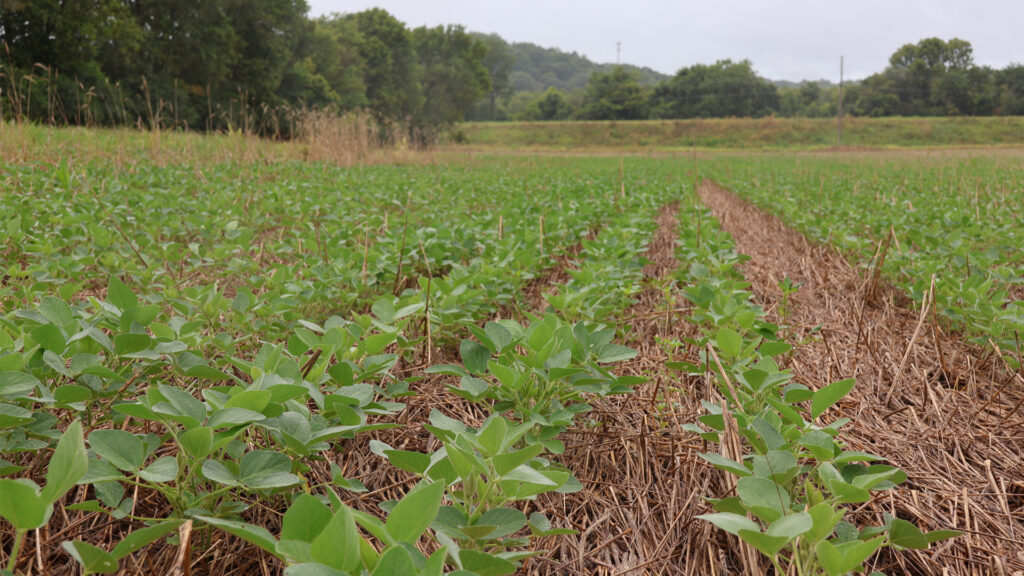
The solution has been sitting in the soil all along. Regenerative practices like cover cropping and no-till farming rebuild fertility naturally, cutting dependence on the synthetic inputs that a war in the Persian Gulf can price out of reach overnight.
A crisis arriving at the worst possible time
Since U.S. and Israeli strikes on Iran began Feb. 28, the closure of the Strait of Hormuz has sent fertilizer markets into shock. About a third of global fertilizer trade passes through that strait.
Prices for urea – a compound used as a high-nitrogen fertilizer – have jumped nearly 50%, according to Oxford Economics, and could cascade as far as 200-plus percent over the summer.
Fifty-four agricultural groups have written to the White House warning of a “generational decline in farm income.” This lands on top of three years of falling crop prices and rising farm bankruptcies. Our agricultural economy was already in recession before a single bomb fell.
The deeper problem the crisis exposes
For my master’s thesis, I analyzed carbon farming legislation across all 50 states, looking for laws that do what the science requires: direct financial incentives to farmers tied to measurable soil carbon outcomes. Out of hundreds of bills, only 10 from six states made the cut.
In a country with over 900 million acres of farmland, where agriculture accounts for roughly 10% of national greenhouse gas emissions, the legislative foundation for carbon farming barely exists. This is not an agricultural problem. This is a will problem.
University of Colorado researchers found that about a third of fertilizer applied to U.S. corn each year just compensates for ongoing soil fertility loss: half a billion dollars annually, spent just to stay in place.
A 2024 McKinsey analysis found 80% adoption on corn and soy acres could unlock $250 billion in economic value over a decade.
What the rest of the world already figured out
My Ph.D. research in Uzbekistan and Tajikistan has reframed how I think about American leadership here, and not favorably. The European Union adopted a verified Carbon Removals and Carbon Farming Regulation in December 2024. Australia has contracted over 200 million tons of emissions reductions through land management since 2014.
The global regenerative agriculture market is heading toward $18.3 billion by 2030, its infrastructure being built everywhere but here. My own research tells you why: Analyzing carbon farming legislation across all 50 states, I found just 10 bills that actually tie farmer incentives to measurable soil outcomes.
This is now a necessity, not a choice

The standard argument against regenerative transition has always been cost — that farmers on thin margins can’t absorb a $200 per acre switch while conventional insurance offers no safety net. That argument hasn’t disappeared. But it looks different now, when the alternative is watching fertilizer bills consume whatever margin is left.
The benefits of regenerative farming — such as reduced input dependence, healthier soil, cleaner water and flood resilience — are shared by everyone. The costs have historically fallen on individual farmers. That calculus hasn’t changed. But the status quo has never looked more dangerous.
For Florida, where algal blooms, seagrass die-offs and intensifying storms are downstream consequences of how the nation’s farmland is managed, the stakes couldn’t be higher.
The science is there. The economic case is made. The crisis has arrived. What’s missing is the political will — and the honesty to admit we have been waiting far too long already.
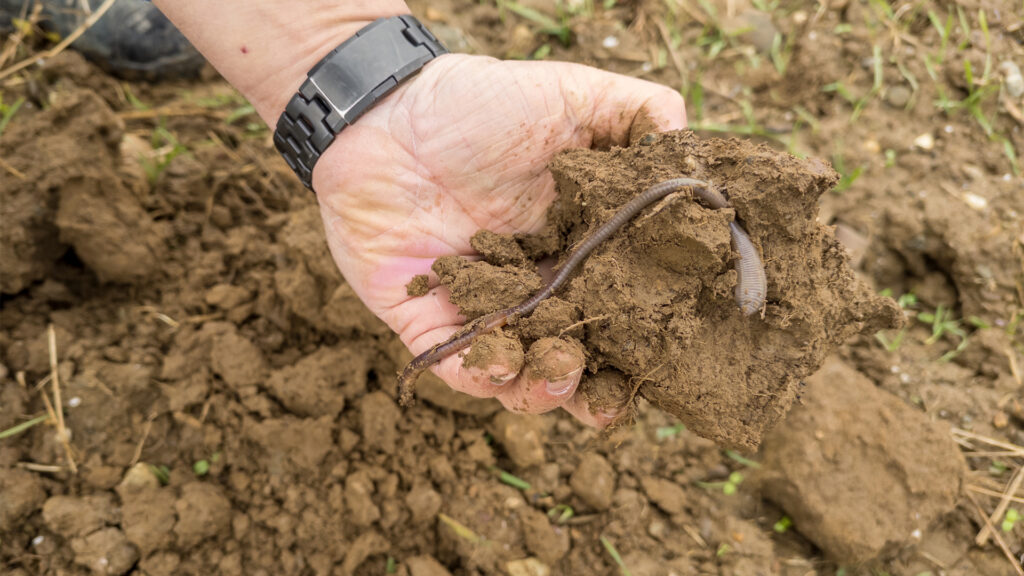
Rock Aboujaoude Jr. is the director of Campus Climate Corps and is pursuing a Ph.D. at UF in agricultural education and communication, where his dissertation examines regenerative farming adoption in Uzbekistan. He previously served as senior environmental analyst for the Florida Senate and holds a Master of Science focused on carbon farming policy from UF. Banner photo: Soil is shown during a tour hosted by the Center for Regenerative Agriculture at the University of Missouri of a farm that uses regenerative practices such as cover crops (USDA photo by Hannah Strain, Public domain, via Wikimedia Commons).
Sign up for The Invading Sea newsletter by visiting here. To support The Invading Sea, click here to make a donation. If you are interested in submitting an opinion piece to The Invading Sea, email Editor Nathan Crabbe.

Excellent essay! I grew up on a walnut ranch and we were practicing “regenerative agriculture” back in the 1950s! It’s the “best and easiest” way to grow crops!