


By Scott Bores, Florida Power & Light Company
Large energy users — including manufacturing facilities, industrial operations or emerging sectors like data centers — can play an important role in a growing economy. The key is making sure that growth happens responsibly and does not shift costs or risks onto families and small businesses.
Florida has developed a straightforward solution to move the state’s economy forward: Require growth to pay its own way.
Gov. Ron DeSantis recently signed legislation requiring all of Florida’s regulated utilities to develop rate structures ensuring large-scale data centers bear their electric service costs and that risks are not passed on to other customers.
This is another great example of Florida getting things right.
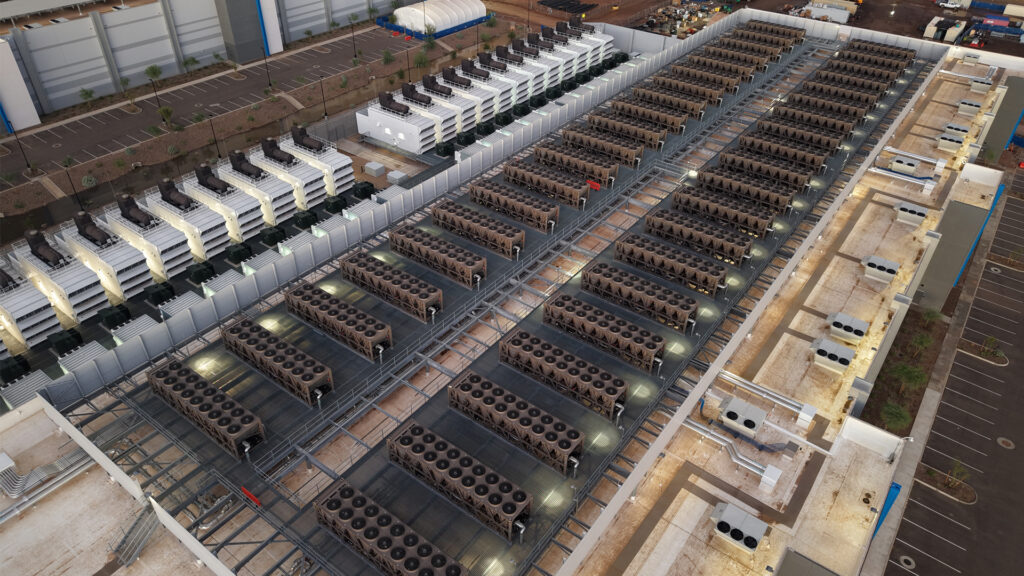
At Florida Power & Light Company, we already put this principle into action with a large-load rate structure approved by the Florida Public Service Commission (PSC). Under this framework, companies connecting significant new demand to the grid are responsible for paying the costs associated with serving their projects, including 100% of any new power generation required to serve their needs.
Our rate structure applies to all large-load customers that rely on significant and continuous electricity use to power their operations around the clock, including data centers.
As part of our rate structure, we established strong protections to ensure large load customers meet their obligations and do not shift risk onto existing customers if a project fails or operations cease.
All large-load customers must fund an engineering study to determine the infrastructure, timing and costs required to serve their power needs. They also must satisfy strict collateral and credit requirements designed to protect customers if a project does not move forward, or a customer fails to perform. In addition, these customers must commit to a minimum 20-year contract and pay a minimum bill that ensures existing customers are not left paying for underutilized infrastructure.
Taken together, these safeguards ensure that customers requesting significant new load also bear the financial responsibility that comes with it. Our existing customers are protected whether a project ultimately succeeds or not.
FPL has a legal obligation to serve all customers, current and future, residential, small business and large load. These rates are specially designed so we can meet our legal obligation to serve new customers while honoring our commitment to keeping bills as low as possible for everyone at FPL.
The goal is simple: Make sure the cost stays with the company driving the demand, not with Florida’s families or small businesses.
Just as important, this framework delivers real benefits to customers.
Our grid is built to reliably serve customers during peak demand and extreme weather, while also planning for continued growth. When a large customer connects to the system and uses power steadily, it will pay its costs and add significant revenue that helps cover fixed system costs. Over time, that creates downward pressure on rates while maintaining reliability and resilience.
By planning ahead and putting the right policies in place, Florida and the PSC have created a model that both protects customers and supports responsible economic growth. That’s how you build a stronger economy while keeping energy reliable and affordable for the people who call Florida home.
Scott Bores is president of Florida Power & Light Company. This opinion piece was originally published by the Sun Sentinel and other media partners of The Invading Sea. Banner photo: An aerial view of an electrical substation (iStock image).
Sign up for The Invading Sea newsletter by visiting here. If you are interested in submitting an opinion piece to The Invading Sea, email Editor Nathan Crabbe.
