


By Katherine Sayler, Defenders of Wildlife
Tremendous global pressure for their body parts. Extinction in many parts of their range. Very few live births. This isn’t hyperbole — these are some of the factors considered when officials decide in a “Record of Advice” whether to issue a permit to export a giant manta ray captured in Florida’s waters.
Despite these existential threats, in the past six years, the Florida Fish and Wildlife Conservation Commission (FWC) has granted nearly 20 such permits, even though the giant manta ray has been protected as a threatened species under the federal Endangered Species Act since 2018.
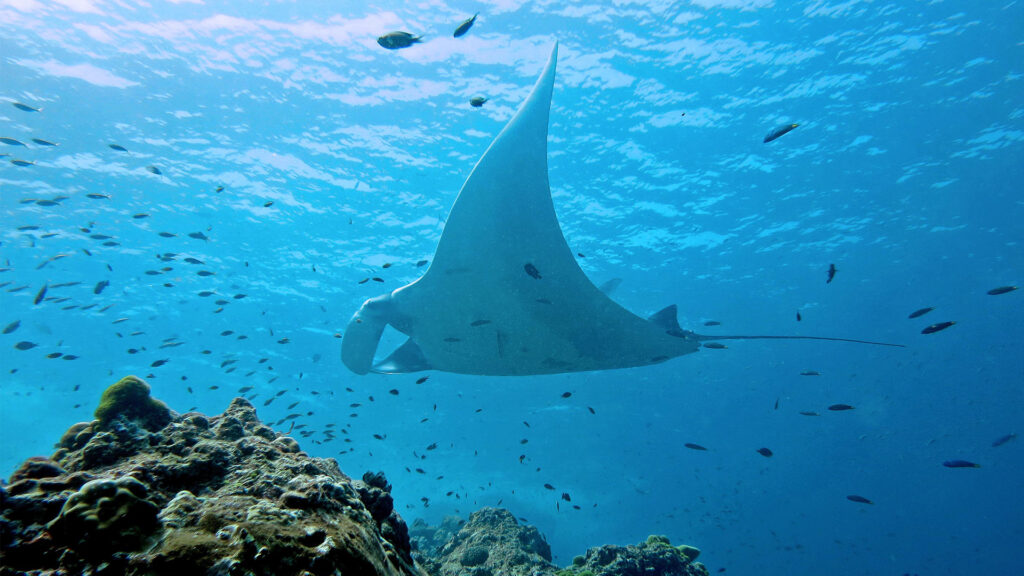
Giant mantra rays, called “angels of the sea,” are majestic, diamond-shaped rays whose elegance is surpassed only by their astonishing size — up to 26 feet wide. The global population pressures on these rays who glide and migrate through tropical waters are tremendous, but their protections from capture in Florida waters have been incomplete. The shortcomings of safeguards to protect them off our coasts were hidden from view — until recently.
Florida is the only state that has permitted giant manta rays to be captured and exported to aquariums abroad. Most permits since 2018 have been granted for aquariums such as the Rizhao Ocean Park in China and Seaworld in the United Arab Emirates.
FWC has historically issued permits to allow the capture of giant manta rays through an “exhibition and education marine special activity license.” As our state wildlife agency, FWC has the authority to allow the removal of giant manta rays from Florida’s waters.
Until last summer, the capture and export of rays from Florida’s waters went largely unnoticed. Then a cellphone video taken by a dolphin tour operator, showing a giant manta ray being hauled out of the water and thrown onto the back of a boat, shocked the public. Advocates, scientists and our elected officials sprang into action.
Last week, the FWC took historic action by deciding not to provide these permits for Endangered Species Act-listed threatened species without a complete commission review and vote. Importantly, individual animals may no longer be shipped thousands of miles from Florida’s waters to an overseas aquarium.

This historic change could not come soon enough. Worldwide, giant manta rays are the victims of both accidental bycatch in fisheries gear and intentional targeting for their valuable gill plates. Demand for these filtration structures near their mouths for use in traditional Chinese medicine has soared over the past several decades, even though neither science nor traditional Chinese medical texts support the health claims for the supposed benefits of gill plates. Overfishing is the main factor behind the species’ 2018 Endangered Species Act listing.
The FWC has also taken the important step of recognizing that Endangered Species Act-listed threatened species need additional strong agency and regulatory support at the state level. We applaud our state agency leaders for paying attention to the public’s voice and working to close loopholes that allow our precious natural heritage to be diminished.
For Floridians, this means that the marine wildlife we all love, from manatees and sea turtles to giant manta rays, will thrive in our waters for generations to come.
Katherine Sayler is the southeast representative at Defenders of Wildlife. She resides in Gainesville. Banner photo: A giant manta ray (amanderson2, CC BY 2.0, via Wikimedia Commons).
Sign up for The Invading Sea newsletter by visiting here. If you are interested in submitting an opinion piece to The Invading Sea, email Editor Nathan Crabbe.
