


By Paul Owens, 1000 Friends of Florida, and Lisa Rinaman, St. Johns Riverkeeper
For a state whose economy and identity depend on clean waterways and aquifers, Florida holds an unfortunate distinction: the largest total acreage of polluted lakes and reservoirs.
State leaders have made significant efforts to improve water quality, but there’s much more to be done — including reducing negative impacts in watersheds where biosolids are applied on land. A disproportionate share gets dumped in the Upper St. Johns River Basin (USJRB).
Biosolids is a euphemism for sewage sludge, the residuals from treated wastewater. Florida produces more than 385,000 tons of biosolids a year. As our population and the number of visitors increase, the volume of biosolids — and its impacts — will increase as well.
In 2022, 1000 Friends of Florida began a study of the environmental and societal impacts of how Florida manages biosolids, and how to reduce its negative impacts. The study, released in June, concluded that action is overdue.
An economic study from the Balmoral Group for the St. Johns Riverkeeper and the Public Trust for Conservation, also released last month, estimated at least $1.12 billion in potential clean-up costs from the land application of biosolids in the USJRB.
In Florida, most biosolids are classified as either Class B, which receive the minimum level of treatment, or the more highly treated Class AA. Per state standards, treatment removes most pathogens and some heavy metals but does not reduce nitrogen and phosphorous, the primary fuel for harmful algal blooms and degraded water quality.
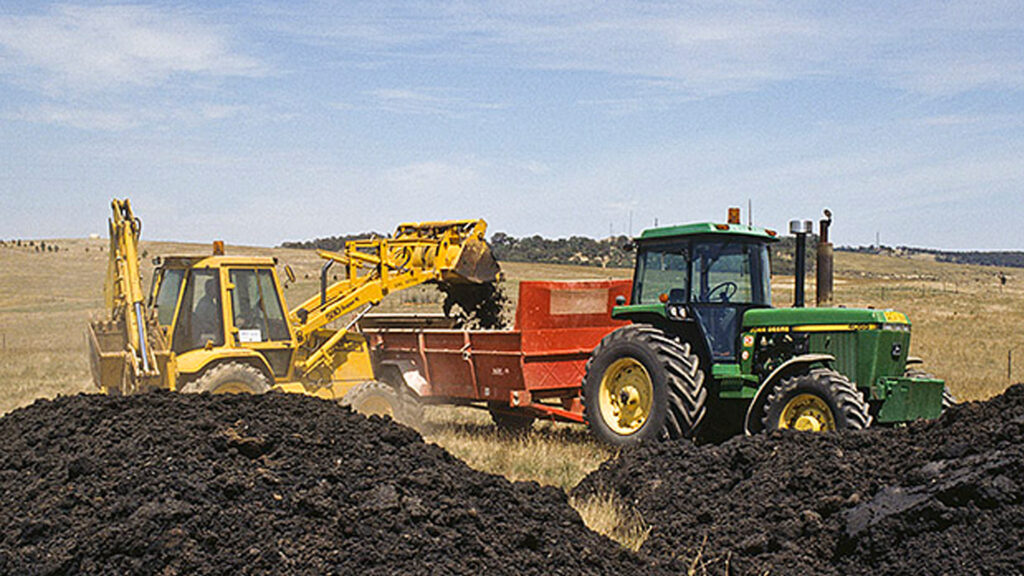
Florida’s most utilized method of managing Class B biosolids is to spread them on land used for growing hay or as pastures. When nutrients exceed what can be readily absorbed by plant growth and soils, a portion of the remainder ends up in lakes, rivers and streams.
The St. Johns River Water Management District found a significant upward trend in phosphorus concentrations resulting in impaired waterbodies throughout the USJRB. This trend is correlated to the USJRB’s receipt of over two-thirds of the state’s Class B biosolids since the land application of biosolids was effectively banned in South Florida starting in 2013. 1000 Friends also found a statistically significant nexus between Class B land application and the likelihood that the nearest waterway is impaired by nutrients.
Biosolids may also contain contaminants of emerging concern, including PFAS. These “forever chemicals,” some toxic and bio-accumulative, aren’t removed by conventional wastewater and biosolids treatment.
There are no published health data regarding biosolids-based PFAS exposure in Florida, and no routine monitoring of their presence in wastewater or biosolids. This is among multiple information gaps associated with biosolids that our state must close as soon as possible.
Because Florida lawmakers adopted regulations that restrict Class B land application in select South Florida counties to reduce nutrient loading of Lake Okeechobee, several of those counties annually transport thousands of tons of Class B biosolids for land application in other parts of the state — mainly to Osceola and Brevard counties in the USJRB, and to Polk County.
That is, Florida’s regulatory framework for biosolids protects some waters at the expense of others. It transfers the concentrated human waste from urban areas to rural areas of the state along with the associated potential health risks and environmental impacts.
In looking at direct, indirect and non-market costs — e.g., impacts on the environment, public health and recreation — 1000 Friends’ study found Class B land application to be the least cost-effective method of managing biosolids.
Clearly, Florida needs a better, fairer approach to biosolids management that minimizes its environmental impacts, reduces risk transfer from one political boundary or watershed to another and imposes the management cost on the generators of biosolids, and not on the recipients or the state’s taxpayers.
Achieving these goals must start with better data collection: monitoring surface-water and groundwater quality adjacent to sites where biosolids are land applied; assessing PFAS compounds in wastewater and biosolids; and tracking the distribution of Class AA and more highly composted biosolids separately from synthetic, chemical fertilizers. Class AA biosolids, now the dominant share of the market and more widely dispersed, contribute significant loading of nitrogen and phosphorus.
Florida’s leaders must hasten the transition to a more environmentally and economically responsible system for managing biosolids and Florida’s growing volume of human waste.
We recommend expanded financial incentives to develop alternatives to land application, and a user fee on wastewater customers to cover monitoring expenses, the financial incentives and the clean-up costs for impacted receiving waters.
The safe, sustainable management of biosolids is an urgent objective in Florida’s essential efforts to improve water quality and to protect Floridians. It’s past time for action.
Paul Owens is president of 1000 Friends of Florida, a nonprofit organization that advocates planning for sustainable communities. Lisa Rinaman is the St. Johns Riverkeeper who defends the St. Johns River and advocates for its protection. Banner photo: Sunset over the St. Johns River (iStock image).
Sign up for The Invading Sea newsletter by visiting here. To support The Invading Sea, click here to make a donation. If you are interested in submitting an opinion piece to The Invading Sea, email Editor Nathan Crabbe at ncrabbe@fau.edu.

What about sperm control as a long term solution. There are simply too many people, in FL, and the world, too many for Earth’s resources. Earth is not growing in size, but humans are.