


By Stefan Hagens, The Invading Sea
Since his freshman year at the University of Florida, Rock Aboujaoude has been attending the United Nations’ annual conference on climate change.
Now a Ph.D. candidate at UF, Aboujaoude is preparing to attend this fall’s conference in Brazil. The conference will mark 10 years since the signing of the Paris climate accords, an international agreement to reduce greenhouse gas emissions that the Trump administration withdrew from earlier this year.
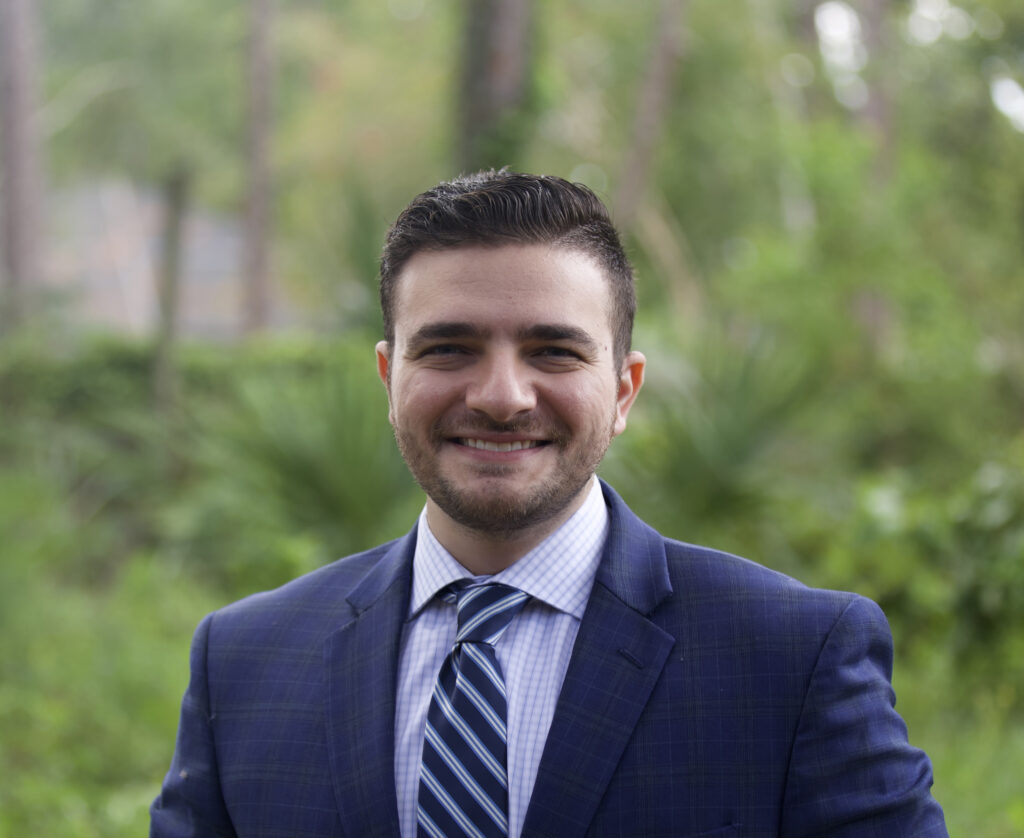
Even amid current political tensions and bureaucratic roadblocks, Aboujaoude said the conference, known as COP30, can still play an important role in climate action.
“Just because the U.S. disengaged with the Paris climate accords does not mean that we’re not advancing on climate policy,” he said.
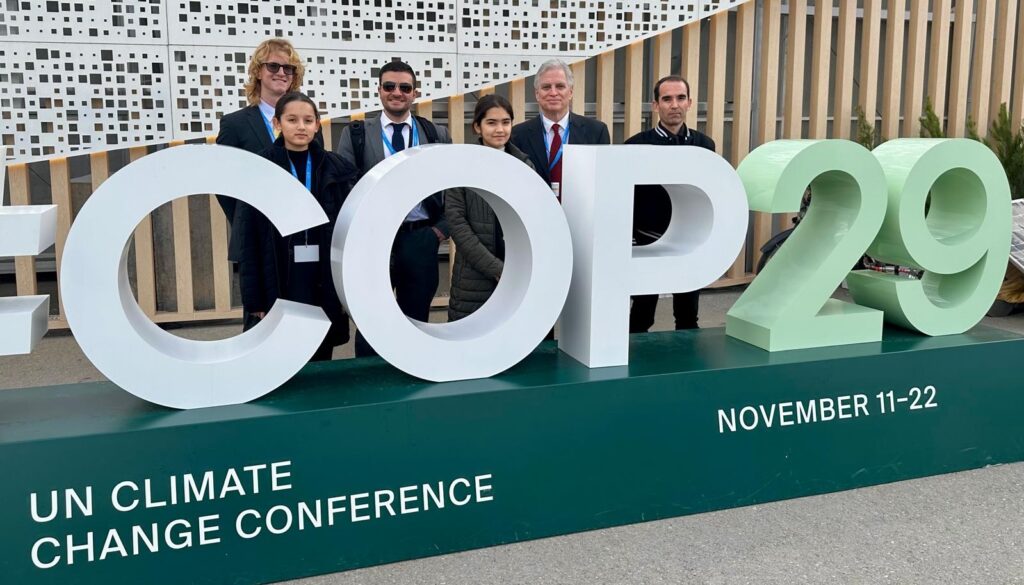
COP, which stands for Conference of the Parties, is an annual U.N. climate summit that brings together world leaders, scientists, nonprofits and activists. Come November of this year, tens of thousands of people from over 190 countries will gather in the Brazilian city of Belém for COP30.
For the first time, the conference will be hosted in Brazil, with the event taking place in a city that serves as a gateway to the Amazon rainforest. A symbol of ecological wealth and hope, the Amazon is also emblematic of climate distress, adding even more significance to this year’s COP.
Aboujaoude plans to travel the Amazon River and document his journey through climate-affected indigenous communities en route to Belém. As he has in years past, he plans on giving daily debriefings of the conference to Florida college students through Zoom. With the exception of COP28, Aboujaoude has attended every COP since 2015.
A native of the rural southern Florida city of LaBelle, the 28-year-old earned both a bachelor’s degree in food and resource economics and master’s degree in climate science from UF. He is now advancing his expertise by pursuing a Ph.D. in climate science, focusing on agricultural practices that store carbon from the atmosphere. In between his degrees, he also served as senior environmental analyst for the Florida Senate and ran for U.S. Congress in a north Florida district.
Aboujaoude is also a member of Campus Climate Corps, a Florida-based organization that aims to mobilize students in pushing for climate solutions. One of the ways they accomplish this is by sending students such as himself to COP conferences.
Aboujaoude’s longtime mentor, John Capece, made it a goal to empower students pursuing climate action. His graduate student organization, Alpha Epsilon Lambda, along with the non-profit student organization Intelligentsia International gave birth to Campus Climate Corps.
With an extensive background in water resources, including serving as Kissimmee Waterkeeper, Capece has witnessed firsthand the hydrological ramifications that climate change has on the environment. He said students in every discipline have a role to play in climate solutions.
“The U.N. people and the government people aren’t going to save us, and we know the U.S. government isn’t inclined to save us,” he said. “It’s going to be the students. It’s going to be their problem.”
Every COP event is preceded by a COY, or Conference of Youth, where young people are able to exhibit their research and solutions on an international stage. While this event acts in parallel with COP, Aboujaoude is among young people who say it does not impact leadership decisions enough.
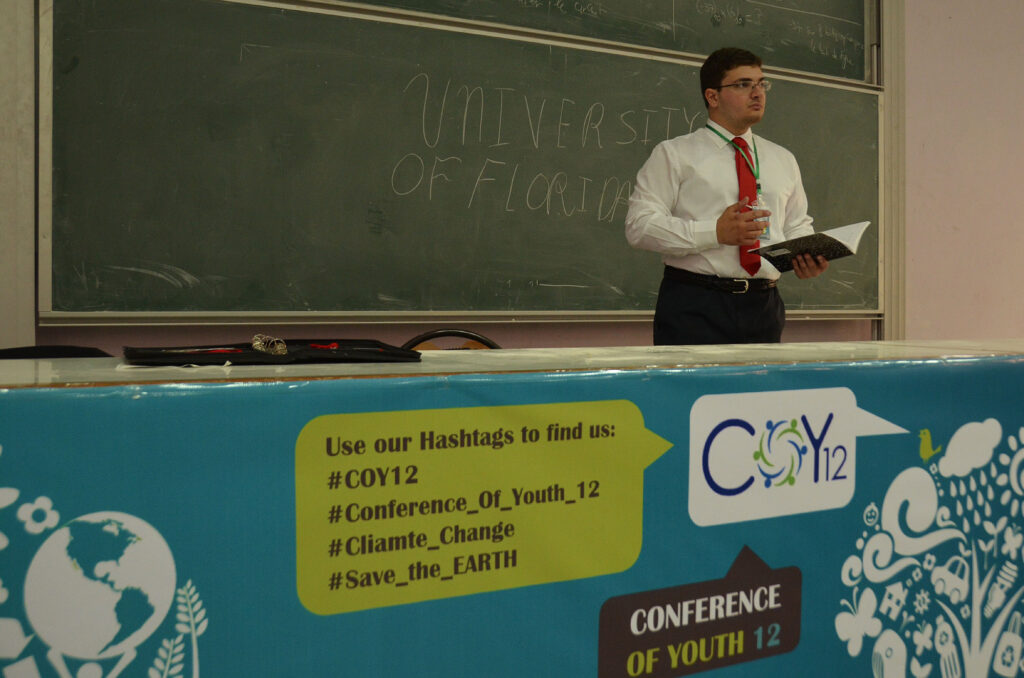
“We realize the United Nations is just pandering to us. … There are no active attempts to include youth at the international policy level other than a pat on the shoulder and a ‘Good job, kid, welcome to the international stage,’” he said.
Aboujaoude said one of the U.N.’s biggest limitations is its lack of enforcement power. This leaves policymaking in the hands of national governments, he said, while the U.N. primarily pressures nations to be transparent about their climate progress rather than enforcing change.
While he believes that COP has systematic weaknesses, Aboujaoude sees great benefit in the opportunities for research collaboration with peers and the advancement of science internationally.
“Students attending and connecting with fellow students, it enables us,” he said.
Aboujaoude is inspired by those who continue to attend COP in spite of the reasons for pessimism. COP serves as an international space for people who are determined to make a difference to remind decision makers what is at stake.
Aboujaoude finds that the unity of these people who have not given up is more than enough reason to remain hopeful.
“Even though our national government may not be pursuing climate policy, that doesn’t mean that we can’t,” he said.
Stefan Hagens is a junior majoring in environmental engineering at Florida Atlantic University who is reporting for The Invading Sea. Banner photo: A display about this year’s United Nations Climate Change Conference at last year’s event in Baku, Azerbaijan. (IAEA Imagebank, CC BY 2.0, via Wikimedia Commons).
Sign up for The Invading Sea newsletter by visiting here. To support The Invading Sea, click here to make a donation. If you are interested in submitting an opinion piece to The Invading Sea, email Editor Nathan Crabbe at ncrabbe@fau.edu. To learn more about the urban heat island effect, watch the video below.
