


By Mark McNees
As the director of Social and Sustainable Enterprises at Florida State University, I’ve spent years examining the growing risks of rising sea levels in South Florida. Working alongside graduate research students, we’ve analyzed data from coastal monitoring stations and economic reports, revealing patterns that demand immediate attention from policymakers and residents alike.
The water is rising, and we’re already feeling it
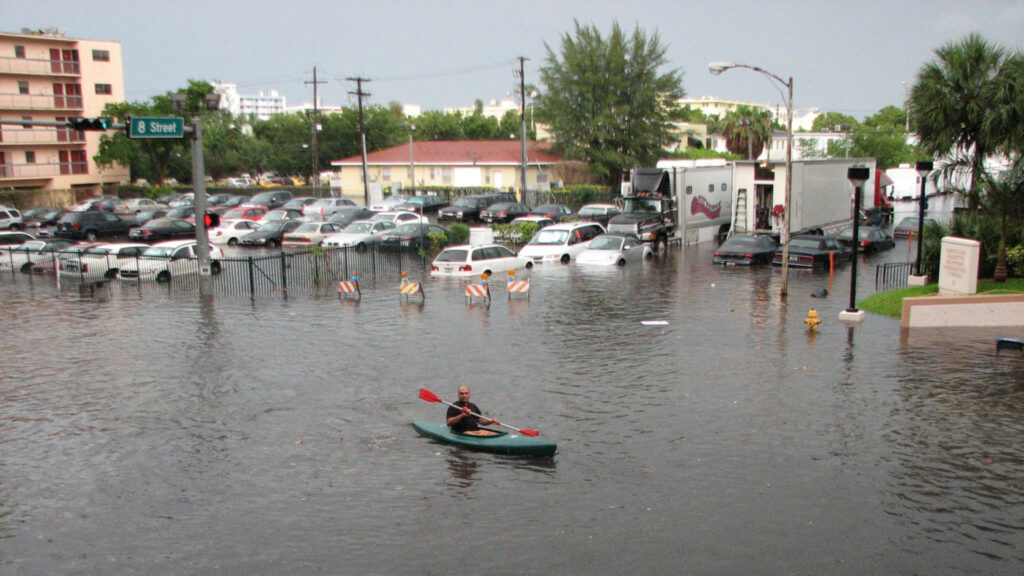
Let’s start with what we can all see with our own eyes. Last year’s “king tide” season — those extra-high tides between September and November — flooded Miami Beach and downtown streets, disrupting traffic and businesses. These aren’t hurricanes or tropical storms but “sunny-day floods.”
The numbers tell a clear story: Florida’s water levels have risen 8 inches since 1950, and are now rising as much as 1 inch every three years. Scientists project that sea levels could rise 10 to 17 inches higher by 2040 than they were in 2000. That might not sound like much, but every inch counts in a place as flat as Miami.
This hits our wallets hard
Miami’s economy depends heavily on tourism. Visitors generated an estimated $21.1 billion in spending in 2023, supporting thousands of local jobs. But if tourists can’t get to restaurants, shops or hotels when streets flood, that money evaporates, unlike the water. When beaches erode, we lose what brings many visitors here in the first place.
Property values are another concern. In flood-prone areas, home values are starting to level off or drop as insurance costs climb. Some homeowners are seeing their insurance premiums jump significantly — money that could be spent on their families or in local businesses instead.
Small businesses — from waterfront restaurants to marinas — lose money whenever flooding closes roads or keeps customers away. And it’s not just the obvious costs. The whole economy feels it when supply chains get disrupted or workers can’t get to their jobs.
Common-sense solutions that create jobs
The good news? We don’t have to buy rafts to get around town. There are practical steps we can take that both parties should support:
Upgrade our infrastructure: Miami-Dade has plans to raise roads and improve drainage systems. The Miami Forever Bond set aside $192 million for flood prevention — that’s a solid start. With state matching funds, we could speed up projects like pump stations and flood barriers that protect homes and businesses.
Work with nature: Restoring mangroves and wetlands isn’t just for environmentalists — it’s innovative business. These natural barriers absorb storm surges and flood waters, protecting inland areas at a fraction of the cost of seawalls. Plus, restoration projects create construction and environmental jobs right here in Florida.
Build smarter: We need building codes that make sense for Miami. New developments should be built higher off the ground to stay dry. This isn’t radical — it’s practical planning that protects property investments.
Partner for success: Federal programs through the Army Corps of Engineers offer grants for infrastructure improvements. This is taxpayer money coming back to protect taxpayer property. It’s about fixing problems once instead of paying for repeated repairs.
Time to act like neighbors, not opponents
Miami has always been a city of innovation and determination. Miami has weathered storms and will weather this challenge too — but only if we work together. These rising water levels don’t care about party affiliation. It not only affects everyone who lives, works or owns property in Miami, but it also affects our whole state.
The solutions aren’t Democrat or Republican — they’re practical Floridian investments that protect homes, create jobs, and keep Florida and Miami’s economy strong.
Our research at FSU shows that acting now saves money and protects Miami’s community. It’s time for leaders from both parties to come together and implement these common-sense solutions. After all, we’re all in the same state — and our state needs a thriving Miami.
Mark McNees is the director of Social and Sustainable Enterprises at Florida State University and lead consultant at the McNees Group. Banner photo: Sunny-day flooding in Miami during a king tide (B137, CC0, via Wikimedia Commons).
Sign up for The Invading Sea newsletter by visiting here. To support The Invading Sea, click here to make a donation. If you are interested in submitting an opinion piece to The Invading Sea, email Editor Nathan Crabbe at ncrabbe@fau.edu. To learn more about king tides, watch the short video below.

We need to stop near term mitigation and plan long term. We need to plan for the worst-temperatures rising 5 d C; sea level rises of 10 ` to 40` plus due to the melting of Greenland and West Antarctica; the disruption of Atlantic currants. This is not the time to do little or nothing as proposed by politicians. We need to stop fossil fuels now. There has been no positive news about climate change in 50 years. Mass extinction has started with over 30,000 species going extinct each year. Our species is not exempt nor improbable. To see our future look at ex tinction events of the past all have been from climate change. Remember the Dinosaurs!