


This story was originally published by Grist. Sign up for Grist’s weekly newsletter here. This coverage is made possible through a partnership between Grist and WABE, Atlanta’s NPR station.
By Emily Jones, regional reporter, Georgia
Weather-wise, the days after a hurricane tears through are often gorgeous: sunny, cloudless, calm. But the risks aren’t over once the flooding recedes and the wind is no longer hurling debris. Heat can pose a serious, even fatal risk, particularly for workers cleaning up after the disaster, according to new research from the University of Georgia and published by the peer-reviewed journal GeoHealth.
Climate change is increasing the danger on both ends — making the storms more frequent and intense and making the post-storm conditions more unbearable.
The researchers say the danger of heat is often overlooked. Much of the U.S. hurricane season is during the summer, and many of the hardest-hit places are in the sweltering south, meaning it can often be dangerously hot in the aftermath of a storm.
The group of researchers studied the aftermath of Hurricane Beryl in Texas in July 2024. In that storm, 14 people died from direct impacts like drowning or falling debris. Another 14 people died due to heat after the storm; it’s not clear how many of those people may have been disaster-response workers.
“You had as many deaths associated with heat as you did from these direct effects,” said lead author Andrew Grundstein. “So I think heat really is a problem we need to think about, especially when power goes out.”
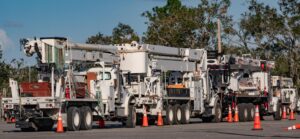
The study focused on workers doing jobs like clearing debris and restoring power, which means long days of heavy work outdoors. Because those workers often travel in from out of town, they may not be used to hot conditions, increasing their vulnerability.
The heat safety steps that can help are “well established,” Grundstein said: regular rest breaks, hydration, monitoring those with health issues. “But the problem with emergency response, right — that doesn’t always lend itself to easily giving people rest breaks when people’s lives can be at stake,” he said. “That’s a real challenge in trying to figure this out.”
What’s more, in the aftermath of a major hurricane, power outages mean no air conditioning, which can make it harder to cool down and recover.
Still, it’s important for emergency managers and the organizations that deploy workers to hard-hit areas after hurricanes to understand the risks of heat, because if those workers get sick, “it’s going to make it harder for them to do their jobs,” Grundstein said. Heat management strategies need to be tailored, the study found, for the specific challenges of storm recovery. Bringing in more staffers can allow them to rotate shifts in order to take more breaks, for instance, and cooling clothing can help mitigate heat when air conditioning isn’t available.
But of course, global warming is making the threat worse, both for disaster response workers and for the population at large. The study found that a typical Houston day in July, when Hurricane Beryl struck, is hot enough to be hazardous to someone working hard with little rest.
Hot summer days are getting hotter, and summer temperatures are extending further into the later, highly active hurricane season months of September and October. Other research has shown that deadly heatwaves following hurricanes will become more common in the future.
“If you have more hot days, that certainly would increase the risk,” Grundstein said. “If the season expands, the warm season, that could also potentially increase the risk to people.”
This article originally appeared in Grist at https://grist.org/extreme-weather/after-a-hurricane-extreme-heat-poses-a-serious-threat-to-recovery-workers/. Grist is a nonprofit, independent media organization dedicated to telling stories of climate solutions and a just future. Learn more at Grist.org. Banner photo: A utility worker fixes a power line (iStock image).
Sign up for The Invading Sea newsletter by visiting here. To support The Invading Sea, click here to make a donation. If you are interested in submitting an opinion piece to The Invading Sea, email Editor Nathan Crabbe.
