


By Paul Owens, 1000 Friends of Florida
This month, after the Republican supermajority in Florida’s Legislature muscled through a mid-cycle congressional redistricting, Gov. Ron DeSantis justified the new map by citing Florida’s rapid population growth. “Florida experienced 10 years of population growth in three,” he said at a news conference. “Districts are not apportioned properly.”
Putting aside the obvious partisan motivations behind the redistricting, Florida is indeed still growing, even if it’s at a slower pace lately. Yet in recent years key legislators have taken repeated aim at the section in state law, Chapter 163, that was conceived to address Florida’s population growth with locally designed, citizen-informed planning to promote fiscally and environmentally sustainable development.
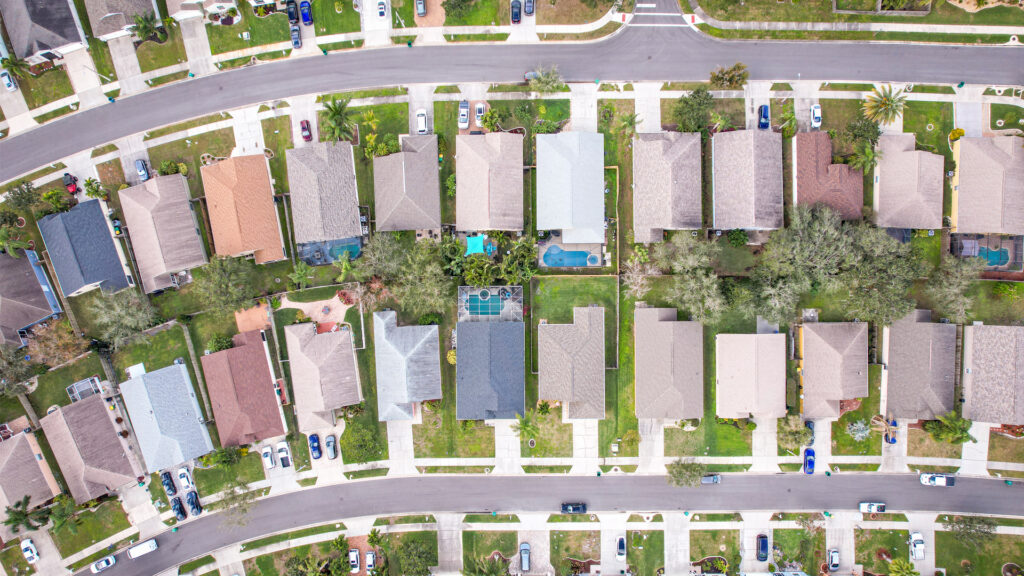
This isn’t just inconsistent; it’s recklessly shortsighted for a state whose identity and prosperity depend on its environment and quality of life — both imperiled by poorly planned growth. It’s an especially timely topic for Miami-Dade County, where a periodic review of the comprehensive development master plan is underway.
State Sen. Stan McClain, the homebuilder who chairs his chamber’s Community Affairs Committee, told a forum last month that he would like to “build consensus” behind a rewrite of Chapter 163 that would allow for more development proposals to be administratively approved.
For those unfamiliar with development law, administrative approval means skipping public hearings, where citizens have the right to deliver comments and local officials go on the record by voting. This approach strikes at the heart of the provision in Chapter 163 that declares, “It is the intent of the Legislature that the public participate in the comprehensive planning process to the fullest extent possible.”
Since Florida’s seminal Growth Management Act of 1985 was passed under Gov. Bob Graham, our state’s laws governing land-use planning have undergone multiple changes. The best have arisen from groups convened to represent a full range of stakeholders. The worst have come from piecemeal changes hastily made during legislative sessions under heavy lobbying pressure from development interests, without meaningful input from others.
Sen. McClain himself has acknowledged that the piecemeal approach should not continue. Recently U.S. Rep. Byron Donalds, currently the front-runner for the Republican nomination to be Florida’s next governor, told a crowd that the state needs to do a better job managing its growth.
Chapter 163 remains the foundation for “orderly and balanced future economic, social, physical, environmental, and fiscal development” throughout Florida. Any credible effort to enact further revisions must involve representatives of every group with an interest in how our state grows.
The stakes couldn’t be higher. In a series of reports we have published with the University of Florida’s Center for Landscape Conservation Planning, 1000 Friends of Florida has shown how millions of acres of critical natural and agricultural land could be needlessly lost in coming decades to poorly planned development. If that’s allowed to happen, Floridians will pay higher taxes or receive poorer public services.
Our environment, including our water supply and our wildlife, will suffer irreversible damage. But so will our economy, especially agriculture and tourism. And so will our communities, from the increased risks we’ll face from storms and flooding to the worsening traffic we’ll be forced to endure.
We welcome a conversation about Florida’s laws guiding growth. But it must be an informed dialogue, with seats at the table for every group invested in our state’s future.
Paul Owens is president of 1000 Friends of Florida, a nonprofit, nonpartisan citizens’ advocate for fiscally and environmentally sustainable community planning. Banner photo: Housing under construction in Florida (iStock image).
Sign up for The Invading Sea newsletter by visiting here. If you are interested in submitting an opinion piece to The Invading Sea, email Editor Nathan Crabbe.

Is there a way we can make a formal class action law suit against the state and local govt citing what you’ve outlined as well as Article II section 7 of the state constitution? There are thousands who are waiting to join in on such a claim. There has to be a lawyer somewhere that would take the case. We also need financial support to fight this fight. Has anyone started a NFP for us to join. I wish I had the time and knowledge to make all this happen. We need experts.
Thank you, Paul for this inciteful essay. We, as citizens, need to continue the fight for sustainable development. Due to your advocacy we can find those who believe in this issue. Florida is home for many critical habitats and natural areas with wildlife that needs to be protected. There is room for all if it is done right.