


By Tom Cosgrove
The phrase “larger than life” was used in the 19th century by art critics to describe heroic statues — figures built on a scale bigger than ordinary humans, meant to tower over public squares and command attention.
I have spent nearly half a century in the orbit of a man built to exactly that scale.
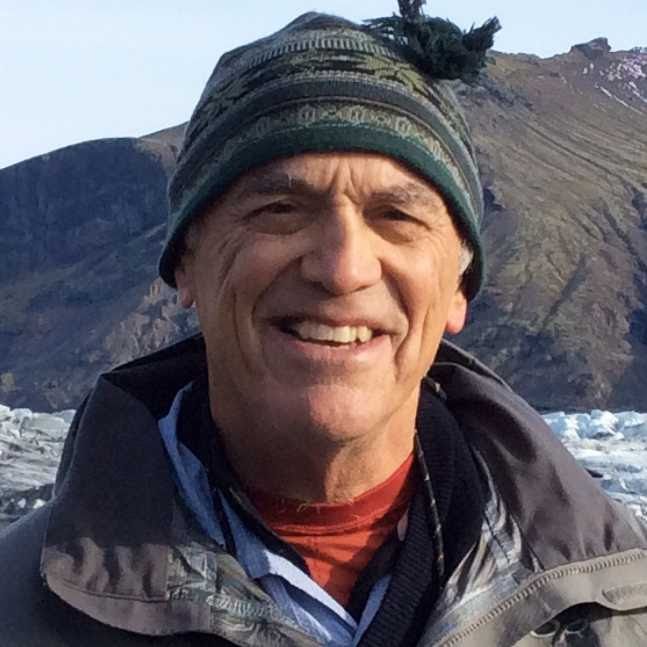
Last month, headlines announced that climate advocate Rafe Pomerance died at age 79. But reducing Rafe to a headline feels almost impossible. How do you summarize someone who spent decades refusing to let the world look away from its future? How do you compress a force of nature into a few paragraphs of obituary copy?
I first met Rafe in January 1980. I was 22 years old, newly arrived in Washington as an intern for the Coast Alliance, the organization coordinating the “Year of the Coast,” a national effort to focus attention on America’s shorelines and oceans. I was young, idealistic, and trying to figure out how I could contribute to the unfinished work of protecting both democracy and the planet.
Rafe was president of Friends of the Earth and chair of the Coast Alliance. At my very first board meeting, he changed the trajectory of my life.
“We have something more important than the coast to talk about today,” he said. “Rising greenhouse gases.”
At the time, almost nobody was talking about climate change. But Rafe had stumbled across a warning buried in a late-1970s Environmental Protection Agency coal report — that continued fossil fuel combustion could fundamentally alter Earth’s atmosphere.
Journalist Nathaniel Rich later chronicled that critical period in his landmark New York Times Magazine article “Losing Earth,” documenting how close the world came to confronting climate change decades ago — and how politics failed to meet the moment. Rafe stood at the center of that story.
He was relentless, loud, funny, brilliant and impossible to ignore. His enthusiasm wasn’t merely infectious; it was joyful. He could turn a phrase into a rallying cry, a political weapon or a punchline in the same breath.
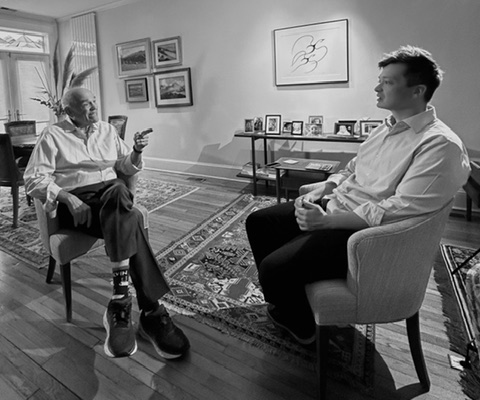
But for all his political intensity, Rafe led with humanity.
One afternoon in 1981, he walked past my desk, looked at me for about two seconds and said, “Let’s go get ice cream.” As we walked up Pennsylvania Avenue eating cones, he stopped and said, very seriously, “You know what you need? You need kids.”
At 23, children were nowhere on my radar. But his own children — Benjamin, Lilah and Ethan — were clearly the emotional center of his life. Beneath the whirlwind of politics and advocacy, they grounded him.
In 1982, Rafe called me with three words: “Wakes for Dead Lakes.” The idea was to dramatize the acid rain crisis for the 1984 New Hampshire presidential primary. We ended up organizing 190 town meetings instead — and six Democratic presidential candidates showed up to prove their environmental credentials. That was Rafe: a spontaneous idea that became a movement.
Rafe understood something many people in Washington never fully grasped: Climate action was never only about science. It was about organizing. About democracy. About building enough public will to force institutions to act before the damage became irreversible.
And over the decades, the warnings he first raised became lived reality. The atmosphere warmed. The seas rose. We were no longer reading the report. We were living inside it.
Then came another phone call.
“The fate of Greenland is the fate of Miami,” Rafe told me in 2012.
Sea-level rise in Florida would become one of the clearest ways Americans could understand climate risk — not ideology, but physics. Insurance. Mortgages. Infrastructure. Saltwater moving block by block into the financial and civic heart of coastal communities.
That vision eventually became the Upper Limit Project — an effort to define the maximum sea-level rise humanity can tolerate in order to drive more urgent climate action.
That was classic Rafe: taking something planetary and making it immediate, local and morally unavoidable.
Last fall, Rafe traveled to the West Virginia Highlands Conservancy’s Fall Review — a weekend gathering of advocates, students and community leaders in the heart of Appalachia. He knew something wasn’t right with his health. The cancer diagnosis was still weeks away. But he showed up anyway and delivered what amounted to a lifetime’s worth of hard-won perspective: a history of the climate movement from its earliest stirrings to the present moment.
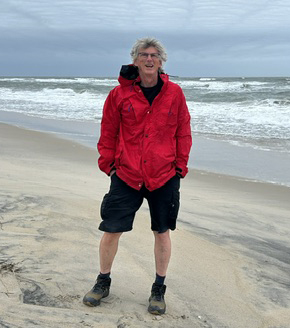
When someone asked whether the fight was becoming unwinnable against the seemingly unstoppable spread of energy-hungry data centers, Rafe didn’t hesitate.
He quoted Joe Hill.
“Don’t mourn,” he said. “Organize.”
The same words that had animated union halls, picket lines and civil rights campaigns for more than a century. Rafe borrowed them for the climate fight — and standing in those West Virginia highlands, not yet knowing what was already growing inside him, he meant every syllable.
I will always miss my friend. The tears in my eyes right now will come and go. But his memory, his legacy, his vision will live in my heart and feed my work.
Maybe it’s best summed up by the small sign old friends Bett and Julie have hanging in their house:
Wake up. Kick ass. Repeat.
Which, now that I think about it, was Rafe’s organizing strategy all along.
Tom Cosgrove has spent more than five decades working at the intersection of politics, civic engagement, environmental advocacy and media. He is the founder of New Voice Strategies, the producer of the PBS documentary series “Divided We Fall” and writes the Substack “Three Ways to Block a Punch,” exploring democracy, climate, culture, organizing and the future of American civic life through history, storytelling and lived experience.
Sign up for The Invading Sea newsletter by visiting here. If you are interested in submitting an opinion piece to The Invading Sea, email Editor Nathan Crabbe. Banner photo: Demonstrators at a rally calling for climate action (Ivan Radic, CC BY 2.0, via Wikimedia Commons).

Rafe Pomerance was a giant in the world of climate advocacy and his knowledge was only rivaled by his depth of character and kindness. He will be greatly missed.
Here is the full video of Rafe’s presentation at the West Virginia Highlands Conservancy’s 2025 Fall Review where he shared the “Don’t mourn, organize” quote from his keynote, “The Launch of the Climate Movement and Where We Go From Here”: https://youtu.be/MG2VKdVtVrI?si=PEXXQaCsJTZFPVyg
Rafe was a wonderful mentor and advocate. He will be missed but we will work every day to follow in his footsteps and honor his legacy.