


By Chris Corrie
Scott Bores, president of Florida Power & Light, makes a reasonable and important point: Florida should not force ordinary residential customers to subsidize the explosive energy demands of massive new data centers.
That principle is sound.
The recent Florida legislation requiring large-load users to bear the direct cost of service is prudent public policy. It reflects an important recognition that artificial intelligence, cloud computing and hyperscale data centers are creating an entirely new category of infrastructure demand that could reshape electric systems nationwide.
But what Bores leaves out of his opinion piece is also concerning.
Surely the president of Florida’s largest utility understands that the challenge facing Florida is far larger than simply designing the right rate structure.
The issue is not merely who pays for the electricity. The larger question is whether Florida — and the nation — fully appreciate the scale and velocity of the coming demand.
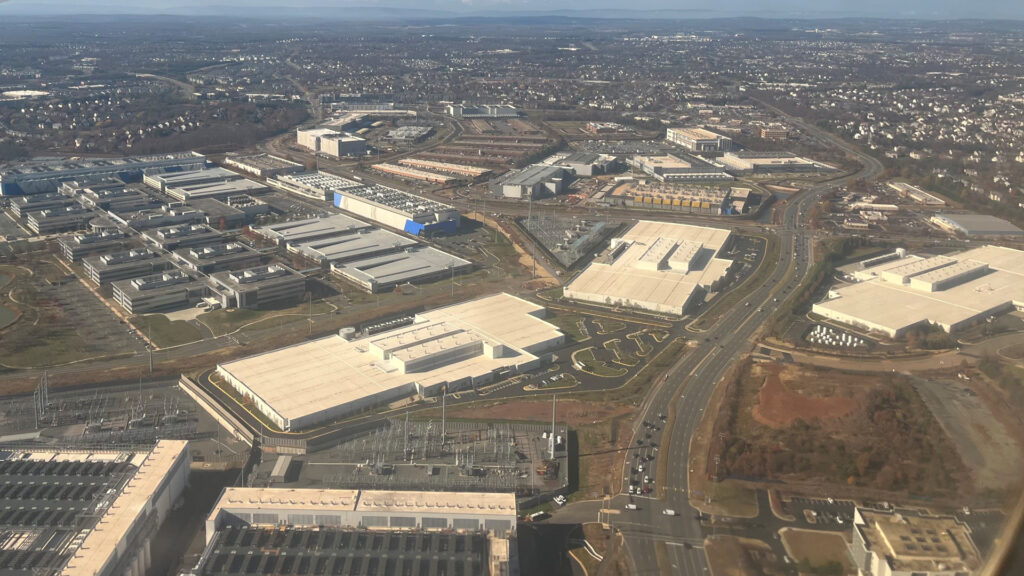
The parent company of FPL, NextEra Energy, has reportedly explored a merger with Dominion Energy in Virginia, the epicenter of America’s data-center economy. Northern Virginia already contains the largest concentration of data centers in the world.
That matters because Virginia is now confronting exactly the issues Florida says it has planned for: extraordinary electricity demand growth, transmission bottlenecks, local land-use conflicts, water consumption concerns and mounting questions about long-term grid reliability.
A single hyperscale AI data-center campus can consume as much electricity as a medium-sized city. Some projections suggest AI-related electric demand could fundamentally alter utility planning assumptions nationwide over the next decade.
And electricity is only part of the story.
Modern data centers also consume enormous quantities of water for cooling systems. In a state already dealing with aquifer protection, Everglades restoration, saltwater intrusion, drought management and rapid population growth, water allocation may become just as significant a challenge as electric generation itself.
Bores does not mention that.
Nor does he discuss perhaps the most immediate constraint of all: labor.
Who is going to build all of this?
The expansion of data centers and electric infrastructure requires electricians, linemen, welders, HVAC specialists, pipefitters, engineers and skilled construction workers.
Florida and much of the country already face serious shortages in the skilled trades. The same workforce needed for power plants, substations and transmission systems is also needed for housing construction, storm recovery, infrastructure replacement and commercial development.
The challenge may not simply be capital investment. The challenge may be whether enough trained people exist to physically build the infrastructure the AI economy requires.
To be fair, Bores is correct that Florida has taken steps ahead of many states. Requiring large users to pay the direct cost of service is smart policy. But his opinion piece reads as though the problem is largely solved through rate design and regulatory planning.
It is not.
The real issue is whether America’s infrastructure systems — electrical, water, workforce, permitting and environmental — can keep pace with a technological revolution moving faster than government planning cycles.
And that raises another uncomfortable question: Do elected officials and regulators fully understand the velocity of the changes now underway?
Because once data-center growth accelerates, these facilities are not easily relocated. Communities will live for decades with the consequences involving energy demand, water usage, land use and infrastructure strain.
None of this means Florida should reject data centers or AI investment. Quite the opposite. These facilities may become as economically transformative as railroads, highways, ports or airports once were.
But honesty matters.
The public deserves a fuller discussion than simply whether residential customers subsidize large industrial users. The broader question is whether Florida is truly prepared — physically, environmentally, economically and politically — for the scale of infrastructure transformation that artificial intelligence is about to demand.
Chris Corrie is a Bonita Springs City Council member. He was a certified public accountant and partner with PricewaterhouseCoopers. This opinion piece was originally published by the Naples Daily News and media partners of The Invading Sea. Banner photo: Cables in a data center (iStock image).
Sign up for The Invading Sea newsletter by visiting here. If you are interested in submitting an opinion piece to The Invading Sea, email Editor Nathan Crabbe.
