


By Mark R. McNees
Florida is about to live through the largest electricity build-out in its history, driven by data centers that consume as much power as small cities. The companies involved, and the utilities and the tech firms they serve, would prefer you experience this as background noise.
Here are five things they would rather you not spend much time thinking about:
1) The deals are secret. When a utility signs a contract to serve a giant data center, the key terms are routinely sealed as confidential, approved by regulators in short order with little analysis.
Harvard researchers who reviewed about 50 of these proceedings found billion-dollar contracts approved without a transparent accounting of who pays for what. In one case that surfaced only because of a lawsuit, court documents showed that a major utility offered a customer a $325 million discount, expected to lose $100 million on the deal and planned to recover the loss from its other customers.
You cannot object to a cost shift you are never allowed to see.
2) You pay first, and you pay for decades. The cost of serving a data center does not appear as a line item on your bill. It shows up years later as a general rate increase, after the substation and the transmission lines are already built and folded into the rate base, where customers repay the investment plus a guaranteed profit margin over the 30- to 40-year life of the equipment.
By the time the higher bill arrives, the decision that caused it is locked in and untraceable. The cost is not hidden by accident. The system was built this way.
3) Many of the data centers you read about will never exist. Developers routinely file connection requests with multiple utilities for the same project, shopping for the best deal. Industry experts estimate that utilities receive five to 10 times as many requests as facilities actually built. One major utility has admitted that only about a fifth of its announced pipeline is likely to materialize.
Here is the problem: If a utility builds capacity for demand that never arrives, the equipment is already in the rate base and customers pay for it anyway. The data center can vanish. The bill cannot.
4) Nobody audits the price the utility pays itself. Florida’s new data center law, SB 484, requires utilities to disclose what they charge large customers. It does not check what a regulated utility pays its own affiliated, unregulated generator for the power in between, a price set within the same corporate family. If that internal price runs high, the excess flows into rates and no part of the new law is built to catch it.
The front door is now guarded. The side door is wide open.
5) Almost no one is in the room on your behalf. Florida’s four big investor-owned utilities serve roughly 9 million homes and businesses. The state office that represents those customers in rate cases is authorized to employ six attorneys.

When regulators approved Florida Power and Light’s roughly $6.9 billion rate settlement last fall, the signers included Walmart, RaceTrac and Wawa, large players with their own lawyers who negotiated terms they could live with. The Office of Public Counsel — the one party there to represent your household — opposed the deal, was overridden and is now asking the Florida Supreme Court to overturn it.
The big customers cut a deal. You were not at the table.
None of this requires anyone to break the law. Each piece works exactly as designed, and that is the point. The fixes are not radical: open the contracts, audit the affiliate prices, verify the demand is real before the concrete is poured and fund the public’s advocate like the fight matters.
Florida led the country by passing SB 484. Leading means finishing the job. The next decade of your electric bill is being decided right now, mostly in rooms you will never see. The least the state can do is turn on the lights.
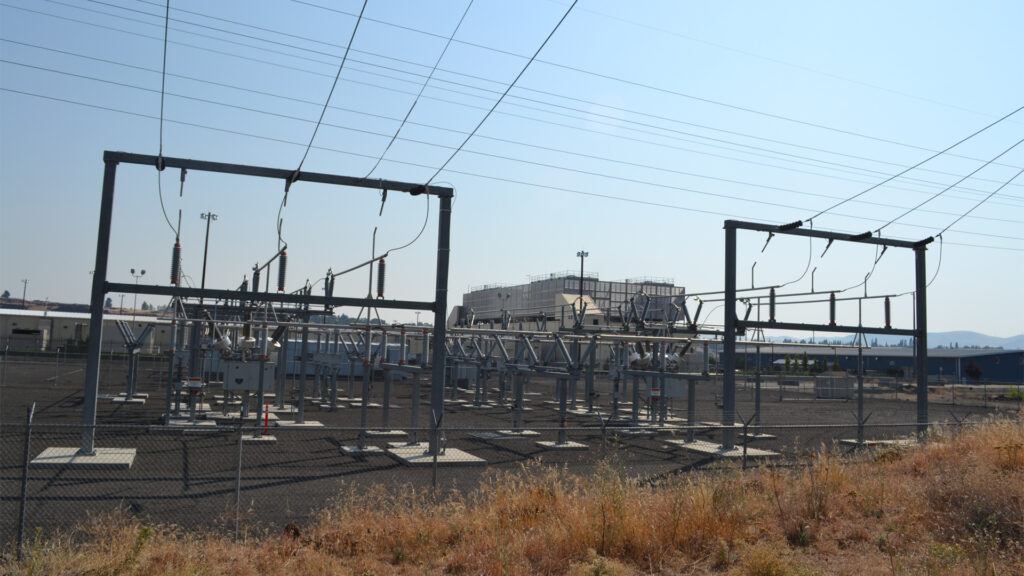
Dr. Mark R. McNees is sustainability entrepreneur in residence and director of the MS in social and sustainable enterprises at Florida State University’s Jim Moran College of Entrepreneurship, and managing consultant at The McNees Group. Banner photo: Electrical infrastructure for a data center being built in Texas (iStock image).
Sign up for The Invading Sea newsletter by visiting here. If you are interested in submitting an opinion piece to The Invading Sea, email Editor Nathan Crabbe.

Utility regulations need to be changed to work for the citizens not the utilities. All of the documents must be open to the public nothing hidden. The data centers must provide there own power needs with renewables- Solar- Wind land and sea based- Geothermal- not nuclear or hydrogen. Data centers only get so much water at 10x the highest rate ,is needed Then that will cost 25-50x. Noise is another problem to regulated. The decibels levels must do no harm. These centers must completely transparent or they don’t open.
Saw this article in the June25th edition of the Dunedin and Clearwater Beacon. Excellent, educational article. Great to keep the public informed. Thanks, JColes (Clearwater)