


By Mary Anna Mancuso, Miami Herald
Miami doesn’t have the luxury of denying or arguing over climate change. It’s here. After weeks of sitting in Editorial Board candidate interviews, I have heard flooding and sea level rise mentioned as top concerns by candidates — and the people in their districts — over and over.
In a recent bipartisan Wall Street Journal opinion piece that caught my attention. Alex Flint and Kalee Kreider said the debate over climate change has been framed as “a battle between denial and ambition, between doing nothing and doing everything.” Flint, executive director of the Alliance for Market Solutions and a former Republican staff director of a Senate committee, and Kreider, a former climate adviser to Al Gore, make the case for a new way forward: clear-eyed realism.
I agree. The time for discussions over climate change being real or a hoax has passed — especially in Miami.
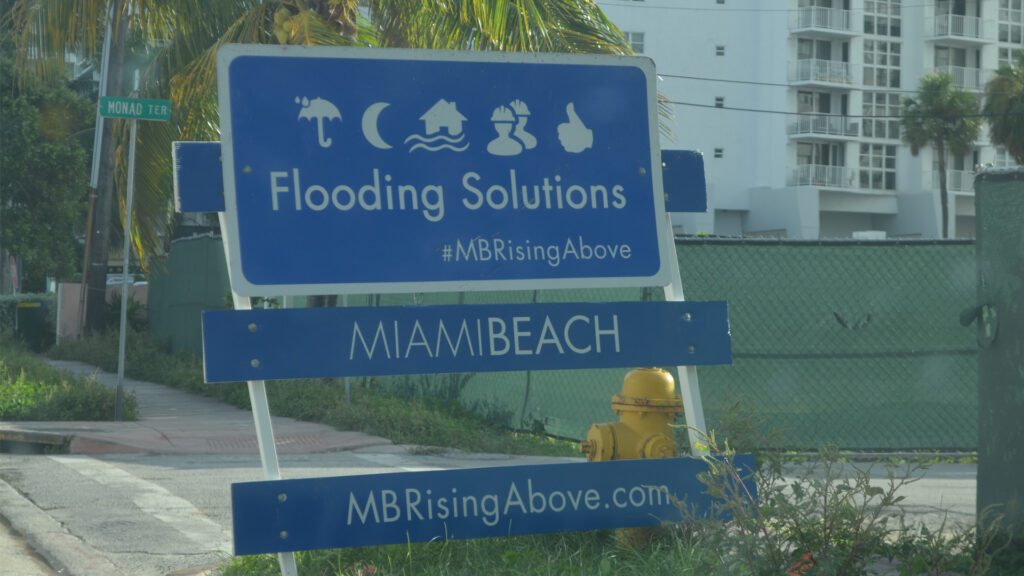
Currently, Miami is in the midst of both king tide and hurricane seasons. It’s been wet. In the city, the roads have flooded. Storm drains aren’t draining as quickly. And on the beach, sargassum has washed ashore more due to warming waters.
Whether you believe these are indicators of climate change or that they are seasonal patterns, that no longer matters. These are problems facing residents and visitors of the Magic City right now.
For years, Republicans who acknowledged climate change have been considered renegades. I’ve seen this firsthand through my time working with republicEn, a nonprofit of eco-right conservatives pursuing market-based climate solutions, where I was a member of the leadership council. But conserving the planet is fundamentally a conservative value.
That’s why recently I’ve been encouraged during discussions with local candidates to hear them — on both sides — acknowledge the need for resilience planning. While there may be disagreement on how to tackle it, few deny adaptation to a changing climate is necessary. That’s a win in my book.
For years, climate policy has been defined by extremes: the need for more federal regulation or complete denial of climate science. What’s needed now is pragmatic adaptation — supporting innovation and investing in infrastructure such as seawalls and stabilizing the shoreline to prevent further erosion.
The city of Miami and Miami-Dade County have already laid the groundwork. At the city level, Mayor Frances Suarez has led on climate adaptation efforts with the Miami Forever Climate Ready program, funded by part of the $400 million Miami Forever Bond. This program focuses on adapting to climate impacts on Miami and coastal protection, and on neighborhood resilience planning. This is part of the Resilent305 initiative — in partnership with the county and city of Miami Beach as well as others.
At the county level, Mayor Daniella Levine Cava’s Climate Action Strategy is focused on adaptation for flooding and sea level rise, protecting against extreme heat and reducing emissions. Most recently, the county has launched the country’s first all-electric rapid bus system.
These are examples of practical governance rooted in public safety and economic stability. They recognize that Miami doesn’t have the luxury of denying scientific facts.
Suarez told Face the Nation host Margaret Brennan in 2022 that climate change is “not theoretical for us in the city of Miami — it’s real.”
Florida is already adapting. Gov. Ron DeSantis has led Resilient Florida, a grant program that helps local governments adapt to climate change, and since its inception has committed over $1 billion for impacts of flooding and sea level rise.
Conservatives can and should lead on adaptation by encouraging innovation and competition. Market forces are already driving solutions. Engineers are rethinking how to build along the coast to minimize destruction during a hurricane.
Some argue adaptation costs too much. But consider the alternative: doing nothing. Hurricane Ian caused over $112 billion in damages in 2022.
Climate adaptation isn’t optional. It’s essential to keeping Miami above rising waters. Florida understands that protecting coastlines, hardening infrastructure and building resilient communities is more than good policy — it’s an investment in the state’s future.
By focusing on adaptation, we can conserve what makes Florida special while proving that conservative principles are more than compatible with climate action — they’re a cornerstone for it.
Mary Anna Mancuso is a member of the Miami Herald Editorial Board. This opinion piece was originally published by the Miami Herald, which is a media partner of The Invading Sea. Banner photo: Sunny-day flooding in Miami during a king tide (B137, CC0, via Wikimedia Commons).
Sign up for The Invading Sea newsletter by visiting here. To support The Invading Sea, click here to make a donation. If you are interested in submitting an opinion piece to The Invading Sea, email Editor Nathan Crabbe at ncrabbe@fau.edu. To watch a Florida Climate Week panel discussion featuring Mancuso that was hosted by republicEn and moderated by Crabbe, click below.
