


By William McQuilkin, retired U.S. Navy rear admiral
She speaks for the trees. I have recently come to know a wise and wonderful woman — a teacher, a healer and a messenger of hope. Diana Beresford-Kroeger, the author of “To Speak for the Trees” and the creator of the documentary film “Call of the Forest,” has an amazing life story and has spent her life protecting and advocating for the global forest.
Beresford-Kroeger and her healing vision of the planet are an inspiration to me. Faced with the threat of a rapidly warming planet, she offers hope and a plan in which trees take center stage.
A renowned scientist, Dr. Beresford-Kroeger has made important discoveries and contributions in the fields of botany, biochemistry and medicine. But what was equally fascinating to me was her education in the ancient Celtic traditions of Ireland, a “sacred trust,” as she explains it.
Orphaned as a child, her extended family in Ireland taught her the knowledge of the Druids and the Brehon laws of the Celts. This tapestry of extraordinary competence in contemporary science, interwoven with her people’s ancient sacred ways, marks Beresford-Kroeger as a singular voice for healing the planet. For me, her words are medicine.
An early climate change visionary, Beresford-Kroeger has been working to protect our environment for over half a century. Concerned about deforestation, the attendant loss of biodiversity and the excessive release of carbon into our atmosphere, she developed a plan to restore the biological fabric of our fragile planet. She calls it her “Bioplan” and it is aimed at replanting the global forest through hands-on education. Hint: You may need to pick up a shovel and get grounded by putting your hands into the rich, loamy soil.
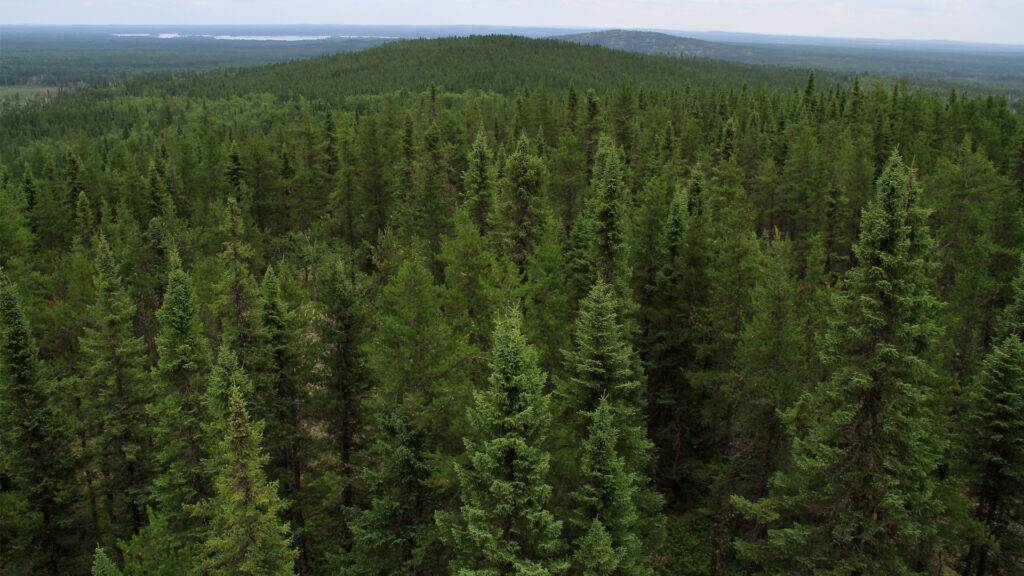
Step one of her Bioplan is to protect what is left of the ancient virgin forest. Forests play an oversized role in regulating the climate. They are the lungs of the Earth. The boreal forest, that crown of trees circling the globe, atop the northernmost latitudes, is the most important among these, according to Beresford-Kroeger.
As she writes, “forests brought the atmosphere of the planet into a balance that could sustain human life.” Now the Earth, our only home, is out of balance. We must restore the balance, and each of us has a role to play.
Closer to home, Beresford-Kroeger’s Bioplan next challenges each of us to do our small part by planting native trees, one per person, per year, for the next six years. As a scientist, she has done the math and calculated the reduction in atmospheric carbon dioxide. Her plan for planting a new international forest will dial down the rheostat on global warming as the trees remove greenhouse gases from the atmosphere. If we reduce carbon dioxide, the temperatures will follow.
Education is the next step in the plan. Her vision is to reacquaint urban populations worldwide with their shared past with forests. This will become increasingly important as our human population continues to grow, with the vast majority living in cities and megacities. How we design and redesign these cities, working with nature rather than against, will be critical. Urban forests come to mind along with greenways for walking and more parks, instead of parking lots, for the children.
Children are key to this part of the plan. Partnering with teachers and schools to learn how to plant native trees and create community gardens is both educational and creates a culture of connection. Imagine a small forest set aside for schoolchildren in every city or town, giving them a chance to see an alternative landscape, something besides strip malls and concrete places. Imagine less screen time and more green time for our children. We adults, in planting a tree with a child, can catch a glimpse of that childlike sense of wonder that they still possess and that we can recapture.
There are other important key components to the Bioplan and her important research that are beyond the scope of this article but suffice it to say that Dr. Beresford-Kroeger is living the plan and is still making important discoveries. Over a quarter century ago, she was the first to publish on tree aerosols. I learned from her the healing qualities of these plant aerosols, invisible to the naked eye but medicinal to humans as we breathe in these forest vapors. The pine tree, for example, which produces alpha-pinene aerosols, possesses anti-inflammatory properties and other benefits to our health. The healing tree could be right in our own backyard.

The thing that most drew me to Diana Beresford-Kroeger’s work was her overarching hopefulness and fighting spirit. She has lived her entire life in service and close to the land. She strongly believes that every person can make a difference, and that each contribution, however small, is valuable. In this time of a rapidly changing climate and unraveling ecosystems, her message of hope is vital. But, as she cautions, we must take that first step and the time to act is now.
Thoreau writes that a man can cut down the forests, “but he cannot converse with the spirit of the tree he fells, he cannot read the poetry and mythology which retire as he advances.” I believe that Beresford-Kroeger can converse with the spirit of the tree and read the poetry of the forest. I am thankful for this generous and fearless soul who has dedicated her life to courageously defending what she holds most sacred, the healing forest.
Diana Beresford-Kroeger is an Earth Keeper, not just for the people who inhabit our wondrous planet, but for every living thing. Reading her books or listening to her speak is an admission ticket to the mystery of the forest, and to life’s simple joy and wonder. I, for one, am glad that she “speaks for the trees.” Perhaps, if we listen closely to her hopeful message, our brokenness will heal, and a culture of connection will ensue.
William McQuilkin is a retired U.S. Navy rear admiral who commanded the Aegis cruiser USS Gettysburg, where he served as Air Defense Commander in the Persian Gulf in support of Operation Iraqi Freedom. He currently resides on his farm in Florida. This opinion piece was originally published by the Tampa Bay Times, which is a media partner of The Invading Sea. Banner photo: Sun shines through trees in a boreal forest. (iStock image).
Sign up for The Invading Sea newsletter by visiting here. To support The Invading Sea, click here to make a donation. If you are interested in submitting an opinion piece to The Invading Sea, email Editor Nathan Crabbe.
