


By David A. Kaplan and Matthew J. Cohen
Wetlands are Florida’s hardest-working ecosystems. From the Everglades to the floodplains of the Apalachicola River, the 10 million remaining acres of Florida wetlands shape life across our state by cleaning water, reducing flooding and serving as habitat for thousands of species of plants and animals, including some of our most iconic and beloved wildlife.
Robust wetland and stream protections are important nationwide, but perhaps nowhere more so than in Florida, where our climate, soils, ecosystems and cultures are so defined by — and interwoven with — the storage and flow of water.
Headwater wetlands and the intermittent streams they feed are essential living infrastructure in a complex system moving water from raindrops to the sea. Wetlands reduce flooding by absorbing and slowly releasing water that would otherwise overwhelm drainage systems and damage property. During dry seasons and droughts, wetlands support groundwater recharge that makes flows in our rivers, estuaries and springs resilient.
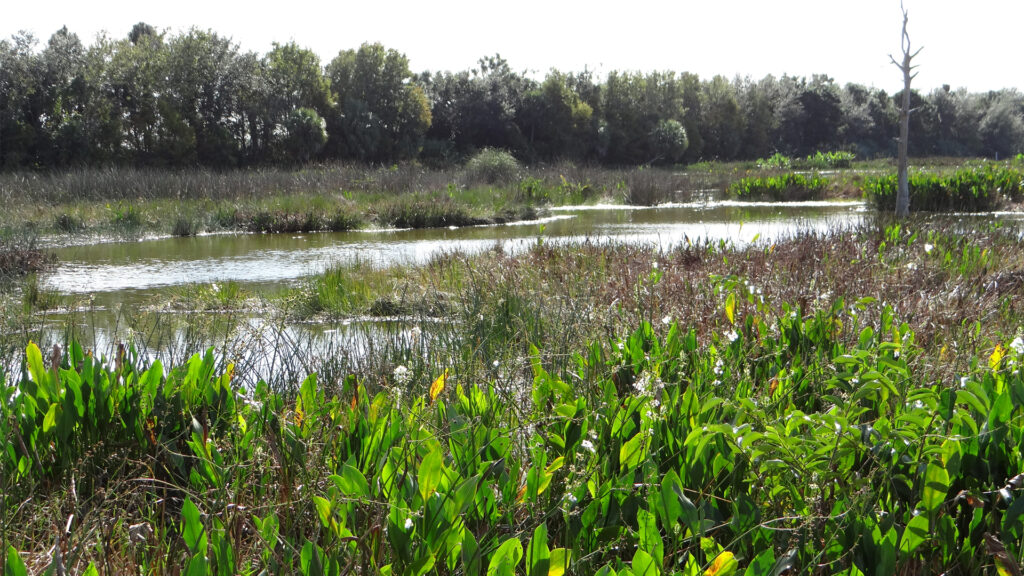
Natural processes in wetlands capture nutrients and sediments that degrade water quality and fuel algal blooms — functions that engineered treatment systems struggle to replace at comparable scale or cost. As we work to confront the thorny problems of nutrient pollution, harmful algal blooms and impaired waters, our stewardship of wetlands is a key measure of our commitment to the long-term health and vitality of water across our state.
That stewardship role has taken on new significance since the U.S. Supreme Court’s 2023 Sackett v. EPA decision, which dramatically narrowed which streams and wetlands are federally protected under the Clean Water Act. By some estimates, more than 90 million acres of wetlands and hundreds of thousands of miles of streams in the U.S. may no longer be “jurisdictional,” meaning they can be drained, filled or polluted without a federal permit. In the wake of this decision, responsibility for safeguarding wetlands and headwater streams has shifted decisively to the states.
Fortunately, Florida enters this new era in a much better position than many states, with landmark legislation from the 1970s and 1980s insulating Floridians from some of the most far-reaching effects of the Sackett decision. The Florida Water Resources Act, signed in 1972, enshrined into law the principle that Floridians collectively own Florida’s water and that it should be managed for public benefit. In 1984, the Warren S. Henderson Wetland Protection Act established measures to stem the dramatic loss of Florida’s wetlands and recognized their intrinsic value to a healthy Florida.
While having laws on the books alone is not enough, Florida’s statutory commitment to protecting wetlands and water provides the foundation for accountability to principles of environmental stewardship that Floridians have repeatedly reaffirmed.
Florida’s most famous wetlands are vast and unmistakable: broad, swampy floodplains shaded by centuries-old cypress and the slow-moving River of Grass, stretching blue and green to the horizon. While these iconic and globally unique systems are ecologically irreplaceable, Floridians also benefit from the ecosystem services of hundreds of thousands of smaller wetlands embedded across landscapes from nature preserves to working forests, farms and neighborhoods.
Decades of research show that these smaller wetlands — often disconnected from continuously flowing waters — provide much of the critical flood control and water-quality protections that downstream communities and ecosystems rely on, while disproportionately supporting imperiled Florida wildlife. Alarmingly, it is these kinds of ecosystems that will be most impacted by the Sackett decision, making state water- and wetland-protection laws more consequential than ever.

We should all be proud that Floridians have had the foresight to protect our streams and wetlands; many states are not so well-positioned to meet this challenge. However, these protections only exist because lawmakers, regulators and voters have chosen to maintain them, holding ourselves accountable to shared stewardship ideals. As pressure on our water and biodiversity resources continues to grow, maintaining strong wetland and stream protections remains one of the most practical and rewarding investments the state can make.
As the Sackett decision reverberates across the country, leadership at the state level — from policymakers, regulators and citizens — is more important than ever. Floridians have inherited one of the strongest legal frameworks for wetland protection in the country, shaped by our state’s unique ecology, geology and a deep conservation commitment to this landscape defined by water.
As federal protection for headwater wetlands and streams recedes, it is important to take a moment to recognize, reinforce and reaffirm Florida’s commitment to protecting these vital ecosystems. Our water, and our state, depend on it.
David A. Kaplan, Ph.D., is a professor in the Department of Environmental Engineering Sciences at the University of Florida and director of the Howard T. Odum Center for Wetlands, where his research connects hydrology, ecosystems and human activities to inform water and natural-resource management. Matthew J. Cohen, Ph.D., is a professor in the School of Forest, Fisheries and Geomatic Sciences at the University of Florida and director of the UF Water Institute, with nearly two decades of experience addressing water-resource and ecosystem-science challenges in Florida and globally.
This opinion piece was originally published by the Tampa Bay Times, which is a media partner of The Invading Sea. Banner photo: Sandhill cranes feeding in wetlands (iStock image).
Sign up for The Invading Sea newsletter by visiting here. To support The Invading Sea, click here to make a donation. If you are interested in submitting an opinion piece to The Invading Sea, email Editor Nathan Crabbe.
