


By William Sweet, republicEn.org
In some Native languages, the term for plants translates to “those who take care of us.”
This concept, that the land is not merely a resource but a reciprocal partner, may seem at odds with our modern economic language of return on investment and infrastructure. But what if our most fiscally responsible investments are those that recognize nature’s profound capacity to provide for our most fundamental needs?
For centuries, Indigenous cultures have understood this intuitively – that the land takes care of us. Today, we have the data to prove it.
The forgotten infrastructure that pays dividends
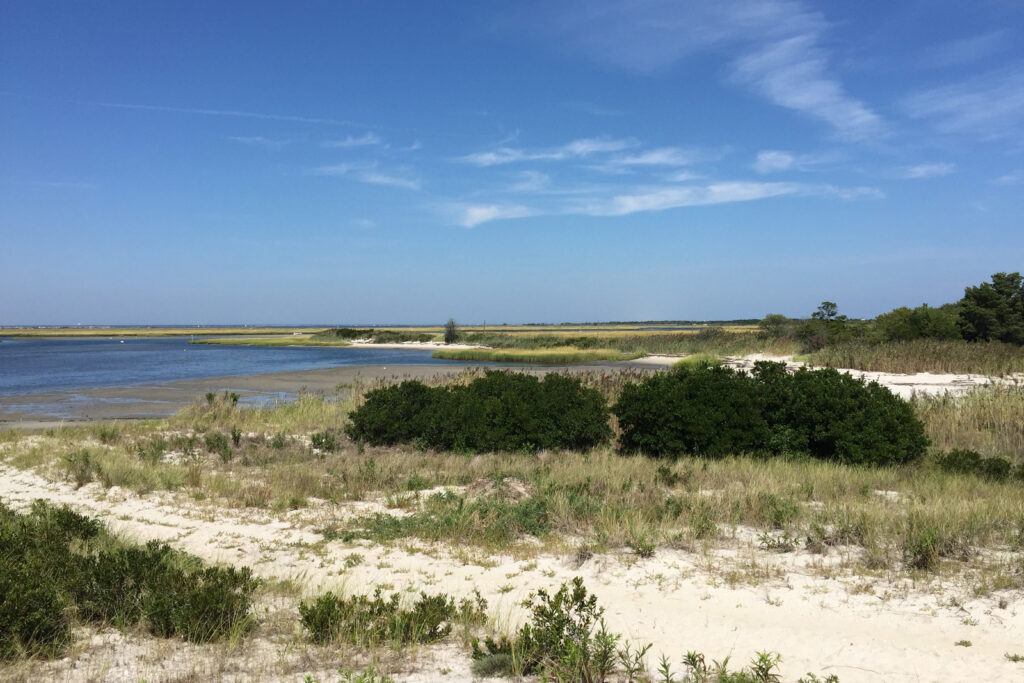
In the aftermath of Hurricane Sandy, economists at the National Oceanic and Atmospheric Administration made a surprising discovery: Stretches of coastline protected by natural wetlands suffered significantly less damage than those fortified by artificial barriers. Wetlands along the Northeast coast prevented more than $625 million in property damage, a figure that includes protection for critical coastal power infrastructure, such as substations and transmission lines.
No maintenance contract. No bond issue. No bureaucracy. Just nature doing what it does best – quietly absorbing risk and adding a layer of resilience to the grid.
Or consider New York City’s landmark decision in the 1990s. Instead of building a new $10 billion water filtration plant – plus hundreds of millions in annual operating expenses – the city invested $2.5 billion in protecting the Catskill forests since 1997. By letting the forest filter the water, the source of its drinking water, New York not only saved taxpayers billions, it secured a cleaner, more sustainable system and avoided a major infrastructure project.
In conservative circles, they often speak of lifting burdens, reducing inefficiency and respecting the power of decentralized solutions. Nature, it turns out, does all three.
Local tree canopies lower city temperatures, cutting air conditioning costs and protecting power infrastructure from overload. This is not simply a comfort upgrade. Urban heat island mitigation is a line item in city budgets, often costing millions in reactive emergency cooling strategies and putting stress on the grid.
Consider Los Angeles, where a simple act – planting trees in the correct spots – has proven profoundly effective. The Environmental Protection Agency found that trees can reduce surface temperatures by as much as 20 to 45 degrees Fahrenheit.
On the ground, neighborhoods with tree cover are 11 to 19 degrees cooler than areas without. This has a direct impact on the energy grid. It reduces peak power demand for air conditioning on the hottest days, helping to prevent blackouts and grid failure. If trees can shield families from rising temperatures, why are we not treating them as a key part of our grid infrastructure?
Every leaf, every panel, every marsh has the potential to lower our costs – not through command-and-control policy, but through thoughtful stewardship and smart investment.
Nature offers us that rare bargain. A study found that every dollar invested in land conservation yields an average return of $4 in avoided infrastructure and economic damage, though estimates vary of course depending on location and method.
Trees planted along public streets can increase property values by 3-15%, strengthening local tax bases without raising taxes. Community solar projects on unused land generate local tax revenue, reduce peak demand pricing and offer utility savings to subscribers – many of them rural or lower-income households.

These are not simply “green” programs. They are grassroots economics. When we allow markets to reflect the true cost of environmental damage, we empower individuals, farms and businesses to invest in what works – without necessarily having top down mandates or political distortion.
For coastal communities, natural infrastructure serves as a vital first line of defense. In Florida, mangrove forests act as powerful living sea walls that protect critical infrastructure and families from storm surge and high winds.
After Hurricane Irma in 2017, Florida’s mangrove forests prevented over $1.5 billion in storm damages, amounting to a 25% savings in counties that have mangroves, protecting over 626,000 people. Simply having 100 meters of mangrove trees can reduce wave height by up to 66%, making them a highly cost-effective form of natural capital and national risk reduction infrastructure.
Nature is not a luxury: It is infrastructure. The kind that does not depreciate or come with debt. The kind that – if allowed to function – can reduce our taxes, strengthen our homes and protect our freedom. In a time when Americans are rightly asking their leaders to do more with less, let us remember what we already have: sunlight, soil, forests and rain.
William Sweet is a volunteer with republicEn.org, a growing group of conservatives who care about climate change. Banner photo: Coastal wetlands in Florida (iStock image).
Sign up for The Invading Sea newsletter by visiting here. To support The Invading Sea, click here to make a donation. If you are interested in submitting an opinion piece to The Invading Sea, email Editor Nathan Crabbe at ncrabbe@fau.edu. To learn more about green infrastructure, watch the video below.
