


By Ava Hilton
Warmer winters are allowing tropical fish to expand deeper into Florida’s freshwater ecosystems, threatening native species and complicating restoration efforts.
As winters are warming up, invasive fish species such as the Mayan cichlid are surviving year-round and expanding into new waterways, disrupting their ecosystems. This trend is not only being accelerated due to climate change but also by canal systems and large-scale restoration projects, allowing them different pathways to move.
Invasive fish compete with native species for food, habitat and spawning areas, said Vanessa Trujillo, senior conservation program manager with the National Parks Conservation Association for the Sun Coast region.
“Warmer winters are playing a role. Historically, periodic cold snaps helped limit how far tropical species could spread north, but milder winters are reducing those natural die-offs,” Trujillo said. “We’re seeing species like Mayan cichlids and tilapia, to name a few, expanding into new areas as water temperatures rise.”
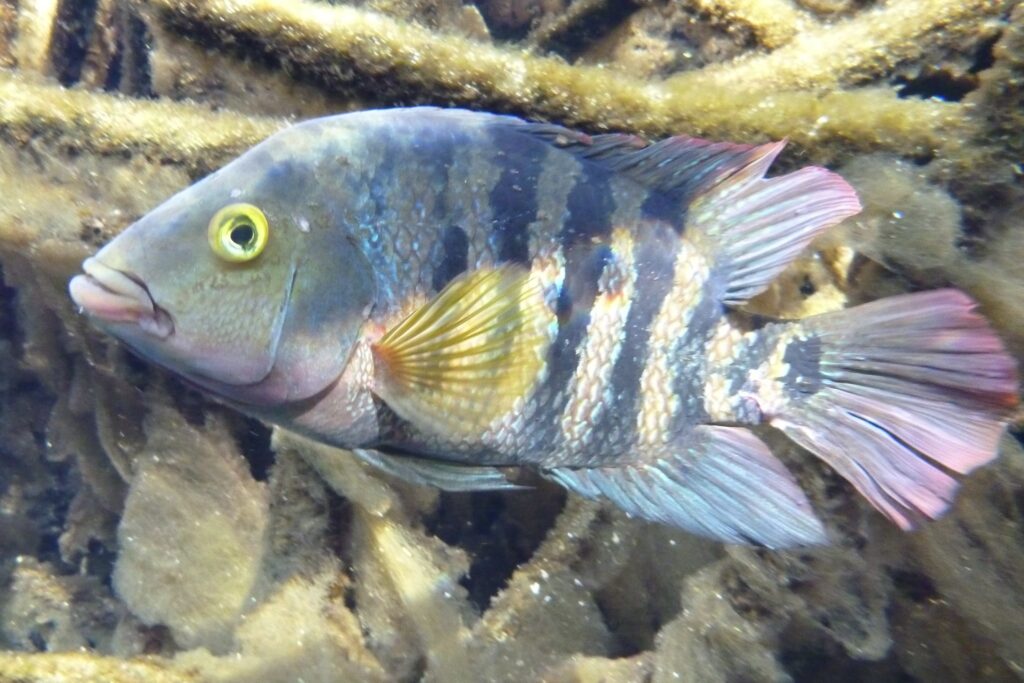
The Mayan cichlid is a tropical freshwater fish identified by a broken lateral line and a turquoise ring on its tail. It typically has six to eight vertical bars along its body, which can range from faint to dark, and may show bright red coloring on the chin, throat and breast. It has both spiny and soft dorsal fins and a rounded tail fin, according to the Florida Fish and Wildlife Conservation Commission.
The fish primarily inhabit canals, rivers, lakes and marshes. They can tolerate a wide range of environments and are very adaptable. They are native to the Atlantic slope of Central and South America, but since their first record in Florida in 1983, they have been prevalent in South Florida and can be found as far north as Lake Okeechobee and the St. Lucie Canal.
Trujillo said invasive fish such as Mayan cichlids are often more aggressive, eat a wide variety of foods and can survive in a broader range of environmental conditions than many native fish, giving them an advantage. Over time, she said, competition can disrupt food webs and decrease biodiversity, shifting the ecological balance that park managers are trying to restore and protect.
Cold temperatures have historically limited the species’ spread, but that barrier may be weakening. Scientists warn that rising water temperatures could allow Mayan cichlids to move into areas that were once too cold to survive.
“Cold water temperatures are the main factor limiting northward movement of Mayan cichlids … however, climate change may enable these species to move into previously uninhabitable water bodies due to warming temperatures,” according to Alexandra Scott and Andrew Carlson in their research article in the Journal of Freshwater Ecology.
While climate change is easing environmental barriers, human-made waterways may also be accelerating the spread.
South Florida’s extensive canal network was originally designed for flood control, agriculture, and development. Today, those same canals connect wetlands and rivers, creating corridors that invasive fish travel through that expand their range. Restoration projects aimed at improving the connection of water flow and habitats across the Everglades may unintentionally create new pathways for these invasive species.
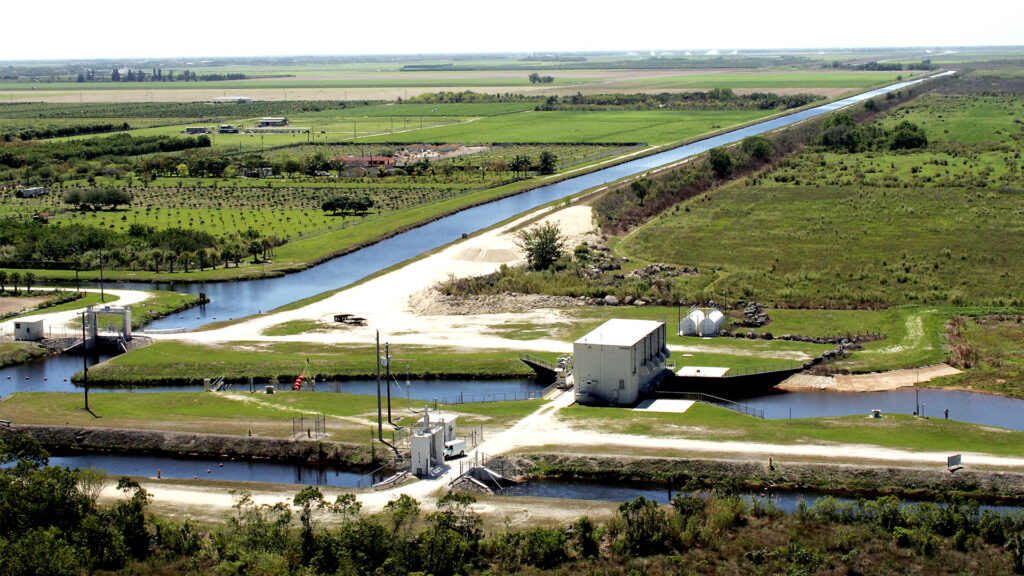
The Comprehensive Everglades Restoration Plan remains the guiding framework for restoring the greater Everglades ecosystem, said Cara Capp, greater Everglades associate director for the National Parks Conservation Association. The restoration plan, authorized by Congress in 2000, focuses on improving the quality, quantity, timing, and distribution of water flowing from Lake Okeechobee to the Florida Keys. It aims to strengthen habitat connectivity and ecosystem resilience.
“Through implementation of this restoration effort, the goal is to create healthy habitats where native species thrive and invasive populations are more easily managed,” Capp said.
Restoration managers acknowledge the complexity of balancing connectivity with invasive species control. While reconnecting wetlands can benefit native fish and wading birds, it can also allow nonnative fish to access new territory.
In addition to large-scale restoration, agencies rely on prevention and early detection strategies. Partnerships such as the Everglades Cooperative Invasive Species Management Area bring together federal, state, tribal, academic and nonprofit organizations to coordinate control efforts, research and public outreach.
“Invasive species management relies heavily on collaboration and science-based action,” Trujillo said. “Eradication becomes extremely difficult once species are established, so prevention and rapid response are critical.”
Public recreation can also play a role in the spread. Boats and fishing gear that are not cleaned between waterways can unintentionally transport eggs or juvenile fish. Officials emphasize the importance of responsible boating practices and discourage the release of aquarium species into local waters.
As Florida’s climate continues to warm, the future of its freshwater ecosystems may depend on how effectively managers can balance restoration goals with invasive species control. The same interconnected waterways that are meant to revive the Everglades could determine how resilient it stands in the face of a changing climate.
“Protecting native ecosystems requires sustained funding, coordinated management and strong community engagement alongside restoration work,” Trujillo said.
Ava Hilton is a junior majoring in multimedia studies and journalism at Florida Atlantic University. Banner photo: Mayan cichlids in a South Florida lake (iStock image).
Sign up for The Invading Sea newsletter by visiting here. To support The Invading Sea, click here to make a donation. If you are interested in submitting an opinion piece to The Invading Sea, email Editor Nathan Crabbe.

Comment huh! That’s not the only species running a muck in South Florida! Try the Haitians, South African and many other illegal immigrants nationals. Let’s look into sending them back to where they come from.
And Yes! ICE needs to operate in those areas to get rid of criminals, unless ya’ll don’t mind getting robbed, stabbed or murdered!
This is a very impressive article. Informative, well written, and surely timely. Ave Hilton has a bright future in environmental journalism. Thank you to Ava for sharing this information, and thank you to the Invading Sea for publishing it. By the way while I am a subscriber to The Invading Sea, as all curious Floridians should be, the version of the article I am commenting on came through my Google News Feed. Ava – you reached a lot of people! Keep up the good work!
You should include Europeans who also came illegally.The native American are the only legal migrants. They are the primary despoilers and polluters.