


By Don Brown, former Florida state representative
In recent years, Florida has seen more than its fair share of natural disasters, with major storms like Michael, Ian and Milton causing billions in damages and negatively impacting thousands of people. This has made disaster preparation and response important and necessary components of our daily life. The next big storm is not a question of if, but when and where, and the latter two matter greatly.
As weather forecasters and emergency management experts work to keep us safe, artificial intelligence (AI) is poised to make an enormous difference in this field by analyzing weather data, providing insights and recommendations, and assisting authorities with coordinating and strategizing emergency response efforts. The more data we can collect and analyze through AI, the better we will be able to predict when storms are going to strike and where they will inflict the most damage.
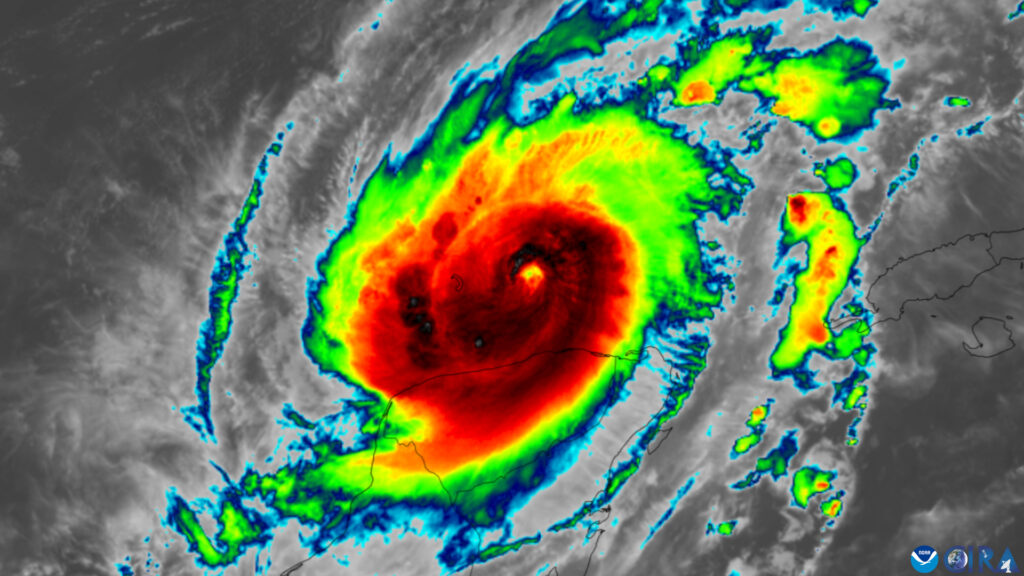
This data can make a world of difference for evacuation efforts, for example, because they can allow authorities to map out flooding, wisely allocate emergency resources, prioritize high-damage areas and organize rescue efforts more efficiently, all in real-time. Many of these efforts are already underway — for example, Google’s Weather Lab partnership with the National Oceanic and Atmospheric Administration (NOAA) seeks to analyze weather data in real time, using AI and give forecasters better information to share with the public.
The ability to quickly analyze and process weather data is especially crucial for natural disaster response scenarios, because on-the-ground conditions are constantly changing and can deviate unexpectedly from prediction models. A minor tropical storm can, for instance, shift course and transform into a serious hurricane in less than 24 hours. AI can help emergency responders stay abreast of evolving conditions while identifying dangerous trends before they worsen, making it a valuable resource where every second matters and time delays can cost lives.
AI can also play a significant role in helping authorities communicate with the public around and during emergency situations. In Collier and Hardee counties, for example, researchers at the University of Florida will soon roll out a new prototype AI chatbot assistant for farmers called “Gaia,” which uses satellite imagery to answer questions conversationally. Farmers can ask Gaia questions like “What areas of my fields are flooded?” or “How does my crop health compare to last year after the big storm?” and receive answers in terms that are both familiar and provide actionable guidance.
This is a great example of how AI can help authorities with communication around natural disasters because it directly reduces the communication burden on emergency responders, while also providing individually tailored data that can be used to plan around and prepare for disaster scenarios. Farmers with this information will be able to respond quickly when needed, focus efforts strategically and be better equipped to navigate disaster scenarios, including any preparation measures they can pursue to mitigate the damage before it hits.

The more we can leverage AI for disaster preparation, the more effective and efficient our disaster response efforts will be. Continued investment in AI, such as the previously mentioned Google/NOAA partnership and R&D pilot programs like Gaia, is essential for making this happen, but we need the right regulatory environment too.
Rushing to regulate AI without fully understanding the technology risks precluding its most beneficial applications. In contrast to states like California, which also faces many natural disasters but whose regulators regard AI as an object of fear and concern, Florida has the opportunity to set a strong, forward-facing and positive example for the nation.
By embracing AI and making the most of the opportunities it presents, Florida can lead the nation in building a better, safer future with AI while also improving storm resilience and better preparing for disaster.
Don Brown is a former Florida state representative and former chair of the House Insurance Regulation Subcommittee. Banner photo: Forecasters assess a new technology for providing next-generation severe weather warnings (NOAA NSSL, Public domain, via Wikimedia Commons).
Sign up for The Invading Sea newsletter by visiting here. To support The Invading Sea, click here to make a donation. If you are interested in submitting an opinion piece to The Invading Sea, email Editor Nathan Crabbe at ncrabbe@fau.edu.

Rep. Brown tries to push AI as an answer to a problem his fellow Republicans have created. If Florida’s weather forecasting capabilities are found wanting, it’s because NOAA, FEMA and other public agencies have been losing necessary personnel, thanks to the empty-headed DODGE assault on those same public agencies.
Using current AI for disaster preparedness is like pumping gasoline to put out a fire. The data centers that power AI and ChatGPT are massive energy and water hogs and in Florida they will contribute much more to heating and flooding than they will to any “solutions”. According to a recent Oil Price article notes that the Southeast is becoming particularly vulnerable to invasive data centers, and that we ordinary ratepayers will be hit with the bills for this massive boost to climate disintegration. Getting us to pay for the data center bubbles is what’s lurking behind Brown’s calls for the “right regulatory environment”.
A large-scale mass email marketer in New York using the latest ChatGPT creates as much greenhouse gas per month as 4300 round trip flights to Paris. If AI is really necessary for Florida’s weather and emergency management security, only the most efficient platforms should be used. At the moment this means using the Chinese platform Deep Seek, and sending the bloated Silicon Valley alternatives to the e-scrapyard.
My email doesn’t plan nice with links. Here are some for the above comment:
https://oilprice.com/Energy/Energy-General/Consumers-Are-Footing-the-Bill-for-AIs-Insatiable-Appetite-for-Energy.html
https://www.businessinsider.com/electric-bills-rise-13-states-because-big-tech-data-centers-2025-7
https://energydigital.com/articles/ais-energy-toll-greenly-compares-chatgpt-4-and-deepseek