


By Ellen Cruse, Citizens’ Climate Lobby
Fireworks have been in the news in recent days – but they might not be part of our Fourth of July celebrations here in Florida.
As of May 26, Florida has already lost over 141,000 acres to more than 2,101 wildfires, according to the Florida Department of Agriculture and Consumer Services. With around one-third of Florida’s counties currently under a burn ban, members of the state Cabinet want to prevent fireworks from starting wildfires during our 250th birthday celebration.
At a recent press conference in Brooksville, state leaders expressed concern about the current intense drought. Florida’s peak wildfire season usually encompasses April, May and June, but outlooks released by the National Interagency Fire Center show Florida is expected to “see more above-average wildfire potential in July and even August.”
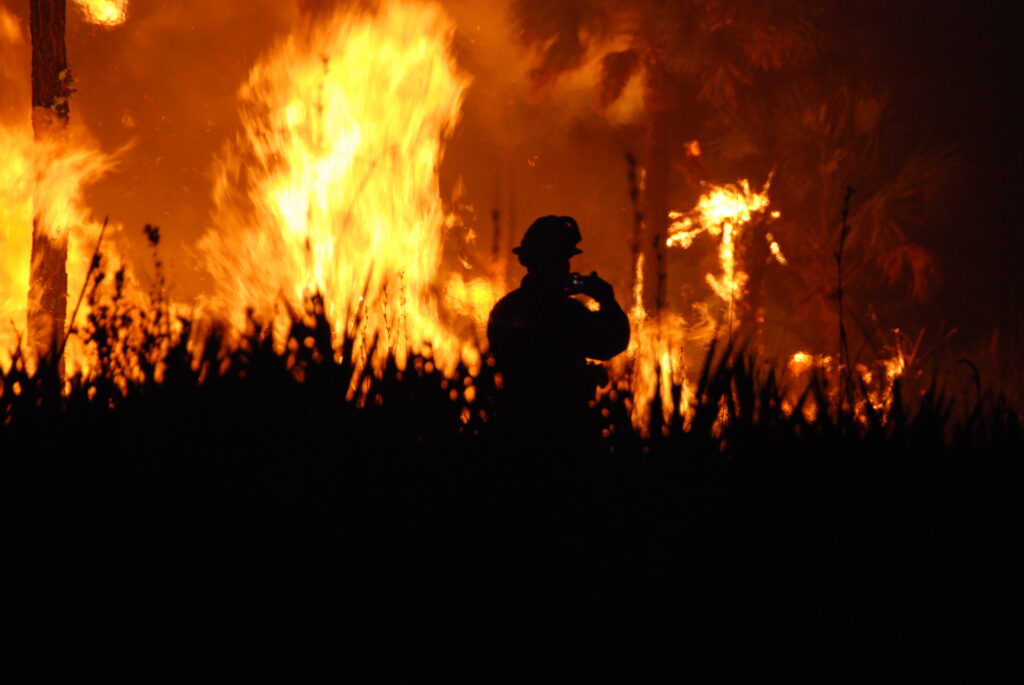
Without significant rain to end the drought conditions in the next few weeks, alternatives to fireworks could be in order for the Fourth of July.
When I moved to Florida four years ago, I knew about the threat of hurricanes, but wildfires were not on my radar. That changed last July, when I lobbied with other members of Citizens Climate Lobby in Washington, D.C.
Our organization is nonpartisan and works to educate everyday people to contact our members of Congress about bipartisan legislation that reduces emissions. One of our asks was to support the Fix Our Forests Act to help prevent wildfires.
Part of our discussion with the offices of Sens. Rick Scott and Ashley Moody and Rep. Mike Haridopolos included a fireshed map of the U.S. from the Rocky Mountain Research Center of the Department of Agriculture. I was surprised to learn that much of Florida ranks in the top 1% of fireshed exposure, indicating a high risk for wildfires.
Preventing wildfires is something that we can all agree is a good idea. The best thing we can do to affect positive change is to contact our elected officials to express our concerns and encourage solutions.
When the burn ban went into effect for Brevard County a few weeks ago, I reached out to Zach Eichholz, chief resilience manager/emergency operations coordinator for the city of Cape Canaveral.
“The threat of wildfires in the state of Florida should not be taken lightly,” Eichholz said. “As temperatures rise and development expands, wildfires will pose more and more of a risk to the built environment. Proper long-term resilience planning efforts should be taken by counties and cities to mitigate and adapt, especially those with large areas of grasslands and forests.”
Resiliency is more than preparing a go-bag and an evacuation plan. Florida needs to invest in prevention: controlled burns, forest management, community preparedness and avoiding building in high-risk areas.
Sunshine State residents can protect themselves by checking fire risks before buying a home, maintaining a defensible space around their homes by clearing dry brush, checking their insurance coverage and adhering to burn bans.

The increasing carbon in our atmosphere has fueled extreme heat and longer dry seasons, both of which are major contributing factors to the increase in wildfires. Droughts can cause wildfires to burn hotter, move faster and become harder to contain, according to University of Florida fire ecologists Victoria Donovan and Carissa Wonkka.
Donovan and Wonkka are leading UF’s effort as part of the multi-institutional endeavor known as the Eastern Fire Network. “We’ve tried to build a coordinated research agenda spanning ecology, climate science, social systems, and community vulnerability to ensure that our emerging science translates into meaningful solutions for places most at risk,” Wonkka told the UF/IFAS Blog.
Wildfires may be a natural part of Florida’s landscape, but catastrophic losses do not have to be. With smarter policies and shared responsibility, we can reduce risk and better protect our communities. Consider adding your voice to protect our natural resources.
Currently, Floridians can reach out to Sens. Scott and Moody to encourage them to support the Fix Our Forests Act and, though further away, the Save Our Sequoias Act. For more information on how you can take action, visit CCLUSA.org/takeaction.
Ellen Cruse lives in Cocoa Beach and is a volunteer with the Space Coast chapter of Citizens’ Climate Lobby, a nonpartisan, grassroots advocacy organization that empowers everyday people to work together on climate policy. Find out more at cclusa.org. Banner photo: A Fourth of July fireworks display in Florida (iStock image).
Sign up for The Invading Sea newsletter by visiting here. If you are interested in submitting an opinion piece to The Invading Sea, email Editor Nathan Crabbe.
