


By Dyllan Furness, USF College of Marine Science
A team of scientists has unlocked a rare isotope in microscopic fossils, revealing a glimmer of hope for the resilience of ocean ecosystems.
In a new study co-led by Patrick Rafter of the University of South Florida, researchers show that warming in the tropical Pacific — home to some of the world’s most productive fisheries — may not trigger the severe decline in nutrients predicted by earlier models. Instead, the region’s fisheries could remain productive even as ocean temperatures rise.

“This is a rare source of good news about ocean warming,” said Rafter, a chemical oceanographer at USF’s College of Marine Science. “Our measurements suggest that, on a warmer planet, the availability of marine nutrients to fuel plant growth and fisheries may not necessarily decline.”
Published this week in Science, the findings demonstrate a cutting-edge approach to predicting future ocean conditions by examining the distant past. Further studies could reveal more reason for optimism about global ocean productivity.
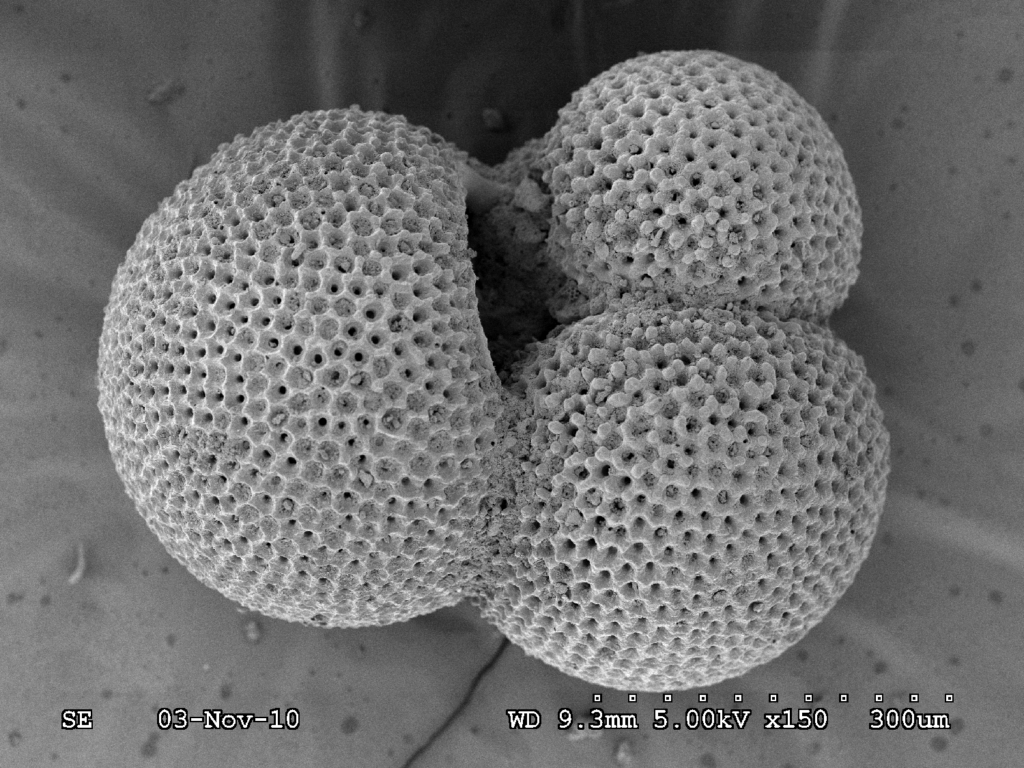
To conduct the study, Rafter and his colleagues looked to the Pliocene Epoch, which lasted from 5.3 to 2.6 million years ago, when ocean warming trends were similar to today’s. By analyzing a rare nitrogen isotope in deep-sea samples — including five-million-year-old fossils of single-celled organisms called foraminifera (forams) — they reconstructed nutrient characteristics from that prehistoric period.
Today, in the tropical Pacific, westward winds drive a process known as upwelling, pulling nutrient-rich waters from the deep ocean to the surface and across the Pacific. This upwelling supports vast blooms of plankton, the foundation of the marine food web.
During ocean-warming events like El Niño, the temperature gradient between the eastern and western Pacific shrinks, winds relax, upwelling weakens, and surface nutrients decline. As a result, fisheries in the eastern Pacific decline. Previous research has suggested that these conditions could become more common in a warming world, but the study by Rafter and his colleague’s challenges that assumption.
The research team found no evidence of reduced nitrate concentrations — a key nutrient for plankton — in surface waters of the eastern tropical Pacific over the past five million years. The results suggest that nutrient upwelling and biological productivity in the region remained stable despite changing temperatures.
“We’ve used this nitrogen isotope like a geochemical fingerprint,” said Rafter, who lightheartedly calls himself an Earth-science detective. “We don’t have a time machine, but we can use our detective toolkit to reconstruct what happened in the ocean the last time Earth was as warm as today.”
Forams, one of the team’s primary research tools, are considered the gold standard for analyzing conditions of the ancient ocean, as their robust shells accurately preserve the nitrogen isotopes over millennia.
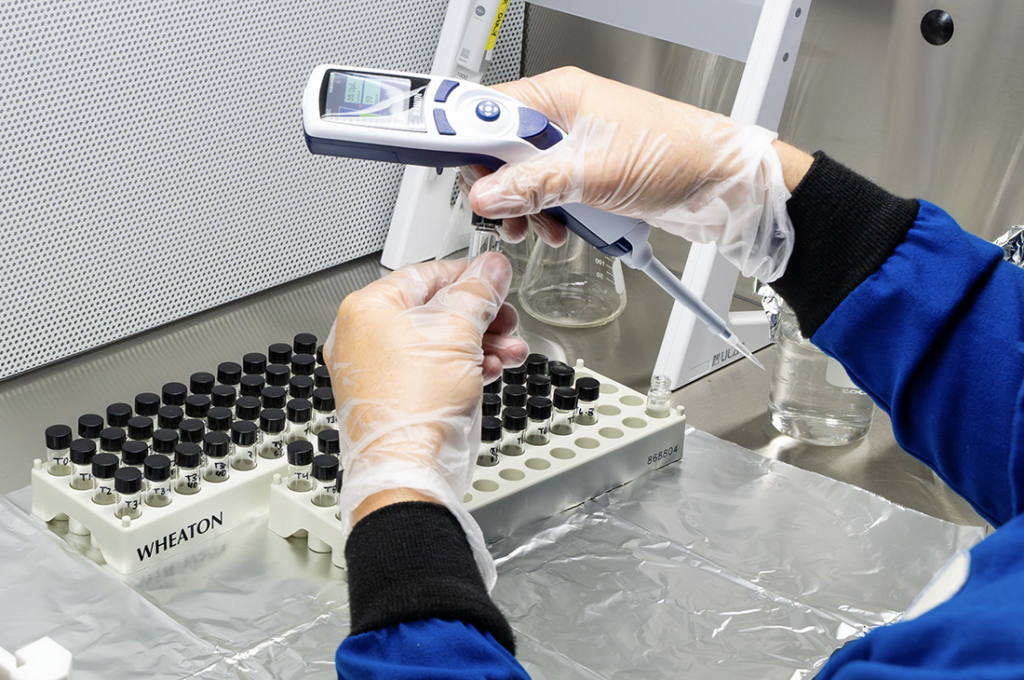
To extract the isotopes, researchers from USF, the University of Massachusetts Boston, the University of California Irvine, and Princeton University sorted the samples by hand to gather the largest foram shells. They then dissolved the shells in a chemical solution, fed the remains to bacteria, and measured the ratio of nitrogen isotopes excreted by the bacteria.
It’s a laborious process but well worth the effort.
“Analyzing nitrogen isotopes derived from forams has allowed us to reconstruct the past with precision,” Rafter said. “We can compare these past conditions to today and make better predictions about the future. The methods we’ve used represent a big step forward in improving our predictive capabilities.”
For Jesse Farmer, co-lead author of the study and assistant professor in the School for the Environment at the University of Massachusetts Boston, the findings come with cautious optimism.
“Our current warming is happening so quickly that the ocean may behave differently than it does when it’s been warm for a long time, as was the case in the Pliocene,” Farmer said, also noting modern threats such as ocean acidification and overfishing.
Still, he added, “It’s good news that the nutrient supply to the eastern Pacific food web will be maintained in a warmer ocean.”
Much of the research for the study was conducted while Rafter and Farmer were postdoctoral researchers at Princeton in the lab of Daniel Sigman, the paper’s senior author.
Looking ahead, the team plans to apply their “detective toolkit” to other parts of the ocean.
“We’re looking at a changing system, and we’re in the middle of that change,” Rafter said. “What’s clear from this study is that the system is more complicated than we previously thought.”
This piece was originally published at https://www.usf.edu/marine-science/news/2025/how-ancient-plankton-point-to-the-resilience-of-ocean-ecosystems.aspx. Banner photo by Jordan Robins/Ocean Image Bank.
Sign up for The Invading Sea newsletter by visiting here. To support The Invading Sea, click here to make a donation. If you are interested in submitting an opinion piece to The Invading Sea, email Editor Nathan Crabbe at ncrabbe@fau.edu.
